

Choosing a digital marketing agency for dentists? Learn the key services, costs, red flags, and 9 hiring criteria to attract more patients with confidence.
Digital Marketing Agency for Dentists: 9 Things to Look for Before You Hire
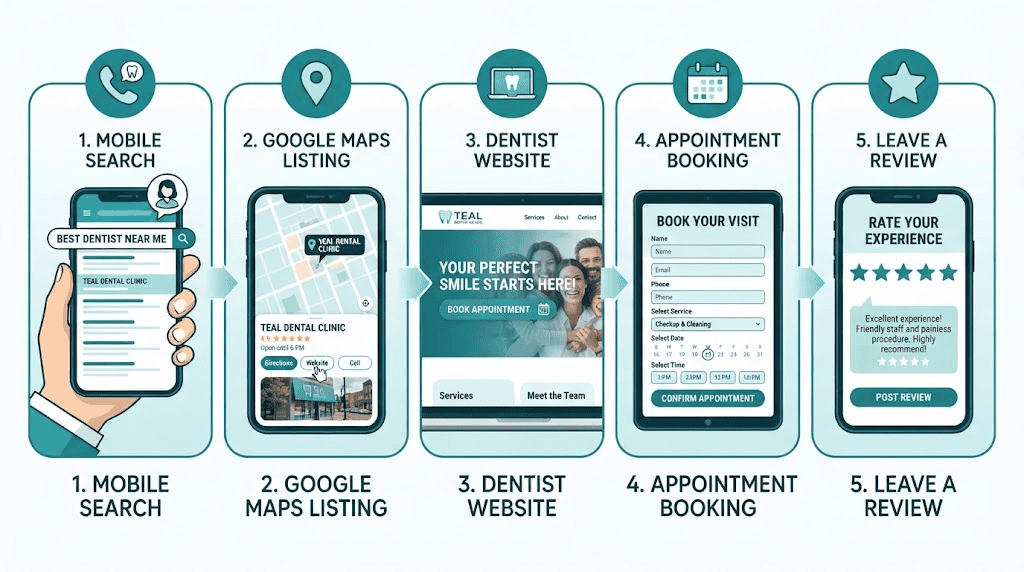
You can be an excellent dentist and still have a quiet appointment book. Most new patients no longer find a practice by walking past it. They search “dentist near me,” compare Google reviews, glance at a website on their phone, and decide in minutes.
A digital marketing agency for dentists helps you show up in those moments and earn the booking. But agencies vary a lot. Some understand dental patients, treatment cycles, and compliance rules. Others recycle the same playbook they use for restaurants and gyms.
This guide explains what these agencies do, which services matter most…” with: “This guide explains what a digital marketing agency for dentists does, which services matter most, how to judge one, and what results are realistic.
What Does a Digital Marketing Agency for Dentists Do?
A dental marketing agency plans and runs the online activities that bring new patients to your practice and keep existing ones coming back. The goal is booked appointments, not just clicks or followers.
Most agencies handle some combination of:
- Local SEO so you appear in Google Maps and local search results
- Website design and optimization so visitors can easily book
- Paid advertising on Google and social platforms
- Reputation management to collect and respond to patient reviews
- Content and social media that builds trust
- Email and text campaigns for recalls, reminders, and reactivation
- Reporting that ties marketing spend to real patient inquiries
A good agency works like an extension of your front desk and treatment coordinator team. It should understand what happens after someone calls, because marketing only pays off if enquiries turn into appointments.
Why Dental Marketing Is Different From General Marketing
Dentistry isn’t an impulse purchase. Patients choose a dentist based on trust, convenience, and comfort, often with some anxiety involved. That changes how marketing should work.
Patients search locally. Nearly every new patient comes from a limited radius. That makes Google Business Profile, map rankings, and location pages far more important than broad brand awareness.
Trust decides the booking. Reviews, before-and-after galleries (used ethically), dentist bios, and calm, clear language matter more than clever slogans.
Services have different values. A routine check-up, a Invisalign consultation, and an implant case have very different lifetime values and patient journeys. Your marketing should reflect that.
Rules apply. Healthcare advertising is regulated in most countries. Patient privacy, testimonials, and claims about outcomes all need care, which we cover below.
An agency that understands this will ask about your case mix, capacity, and goals before pitching tactics.
Core Services to Expect From a Digital Marketing Agency for Dentists
Local SEO and Google Business Profile
Local SEO is usually the highest-return service for a practice. It helps you appear when someone searches for a dentist, emergency dentist, or a specific treatment in your area.
A solid local SEO program typically includes:
- Fully completed and regularly updated Google Business Profile (services, hours, photos, posts)
- Consistent name, address, and phone details across directories
- Dedicated pages for each key treatment and each location
- Local content that answers real patient questions
- Ongoing review generation and replies
Google publishes its own rules for business listings, and it’s worth having your agency follow them closely. Violations such as keyword-stuffed business names can get a listing suspended. See Google’s guidelines for representing your business on Google for the current requirements.
Website Design and Conversion Optimization
Your website should do one job well: help a nervous or busy person book. Many dental sites look fine but lose patients through slow loading, hidden phone numbers, or confusing forms.
Look for an agency that will:
- Build mobile-first pages (most dental searches happen on phones)
- Put click-to-call and online booking above the fold
- Explain treatments in plain language
- Show real team and clinic photos rather than only stock images
- Add clear trust signals such as credentials, memberships, and reviews
- Track calls, form fills, and booking clicks
Google Ads and Paid Social
Paid ads can fill gaps while SEO builds momentum, or promote specific services like implants, aligners, or emergency care.
- Google Search Ads capture people already looking for a dentist. Intent is high, but so is cost per click.
- Local Services and Maps ads can add visibility, depending on your region.
- Meta (Facebook and Instagram) ads work better for awareness and elective treatments like whitening or cosmetic work.
Good agencies set up call tracking, use negative keywords to avoid wasted spend, and send traffic to dedicated landing pages instead of your homepage.
Reputation and Review Management
Reviews strongly influence which practice a patient chooses. An agency can set up a simple, ethical system to request feedback after visits and respond to reviews, including negative ones.
Never buy reviews or offer incentives that break platform rules. It puts your listing at risk and damages trust.
Content Marketing and Social Media
Helpful content answers patient questions before they call. Examples include:
- “How much does a dental crown last?”
- “What to expect at a first visit”
- “Is teeth whitening safe for sensitive teeth?”
- “What should I do in a dental emergency?”
Social media works best when it’s human: team introductions, community involvement, short educational clips, and patient-approved stories. Polished but faceless posts rarely build the trust a dentist needs.
Email, SMS, and Patient Recall
Marketing to existing patients is often cheaper and faster than attracting new ones. Recall reminders, hygiene appointment nudges, treatment plan follow-ups, and reactivation campaigns can fill your schedule without ad spend.
Service Snapshot
| Service | Main Goal | Typical Time to See Results |
|---|---|---|
| Local SEO | More map and search visibility | 3–6 months for steady gains |
| Website optimization | Higher enquiry rate | Weeks after launch |
| Google Ads | Fast new-patient enquiries | Days to weeks |
| Reputation management | More and better reviews | 1–3 months |
| Content marketing | Long-term trust and organic traffic | 4–8 months |
| Email/SMS recall | Fuller hygiene and recall schedule | Weeks |
These ranges are general experience-based estimates, not guarantees. Competition, location, and your starting point will change them.
9 Things to Look for in a Digital Marketing Agency for Dentists
Use this checklist when comparing agencies.
1. Real Experience With Dental Practices
Ask how many dental clients they currently serve and for two or three you can contact. Experience with dentistry means they already understand seasonality, treatment types, and patient concerns.
2. A Strategy Built Around Your Practice
You want questions before proposals: How many new patients do you want per month? Which treatments are most profitable? Do you have chair capacity? A one-size-fits-all package is a warning sign.
3. Transparent Reporting Focused on Patients
Rankings and impressions are useful, but they aren’t the goal. Reports should show calls, form submissions, booked appointments, and cost per new patient where possible.
4. Clear Contracts and Ownership
You should own your website, domain, ad accounts, Google Business Profile, and analytics. Avoid agencies that hold these hostage or lock you into long contracts with no exit clause.
5. Ethical, Compliant Marketing
The agency should understand dental advertising rules and patient privacy requirements in your region, and they should be comfortable being asked about them.
6. Honest Expectations
No one can promise “page one in 30 days” or a fixed number of implant patients. Be wary of guarantees. Honest agencies talk in ranges and explain the variables.
7. Good Communication
Find out who your point of contact is, how often you’ll meet, and how quickly they respond. Poor communication is one of the most common reasons practices leave agencies.
8. Proof of Results
Ask for case studies with context: starting point, actions taken, timeframe, and outcomes. Be cautious with results that look too perfect or come without detail.
9. Alignment With Your Front Desk
Marketing brings the call, but your team converts it. The best agencies offer call review feedback, booking script suggestions, or at least honest insight on where leads are being lost.
Red Flags When Hiring a Digital Marketing Agency for Dentists
Watch out for these signs:
- Guaranteed rankings or patient numbers. Search results and competition can’t be controlled.
- Vague reporting. If you can’t tell what your money produced, that’s a problem.
- Fake or purchased reviews. This risks your reputation and your listing.
- Locked accounts. If they won’t give you admin access to your own assets, walk away.
- Copy-and-paste content. Duplicate or thin content can hurt search performance.
- Pressure tactics. “Sign today or lose the deal” isn’t how trustworthy partners behave.
Questions to Ask a Digital Marketing Agency for Dentists on Your First Call
Bring this short list:
- Which dental practices do you work with, and can I speak to one?
- What would you focus on first in my situation, and why?
- How do you track calls and bookings?
- Who owns the website, ad accounts, and listings?
- How do you handle patient privacy and advertising rules?
- What does the first 90 days look like?
- What is the notice period if I want to leave?
The quality of the answers tells you more than the pitch deck.
How a Digital Marketing Agency for Dentists Charges
Pricing varies widely by country, market size, and scope, so treat any quoted number with context. Common models include:
| Pricing Model | How It Works | Best For | Watch Out For |
|---|---|---|---|
| Monthly retainer | Fixed fee for ongoing services | Steady SEO, content, and reputation work | Unclear deliverables |
| Ad management fee | Flat fee or percentage of ad spend | Paid advertising | Percentage fees that reward higher spend, not better results |
| Project-based | One-time fee for a website or campaign | New site builds or rebrands | No plan for post-launch maintenance |
| Hybrid | Retainer plus ad budget and project fees | Growing practices with several goals | Overlapping charges |
Ad budget is usually separate from the agency fee. Ask for a written breakdown so you know what portion goes to Google or Meta and what portion pays for management.
Rather than asking “What’s the cheapest?”, ask “What is a new patient worth to us, and what can we afford to pay to acquire one?” That number keeps decisions grounded.
Compliance, Privacy, and Ethical Advertising
Dental marketing sits at the intersection of advertising and healthcare, so mistakes can cause real problems.
Patient privacy. In the United States, HIPAA restricts how patient information can be used in marketing. The U.S. Department of Health and Human Services explains when patient authorization is required in its HIPAA marketing guidance. If you’re outside the US, check the privacy and health-data rules that apply in your country.
Testimonials and before-and-after photos. Only use them with clear patient consent, and make sure they aren’t misleading. Some regions and dental councils have specific rules about outcome claims.
Claims and comparisons. Avoid terms like “best dentist in the city” unless you can support them, and steer clear of guarantees about clinical results.
Practical tip: Ask your agency to keep a simple approval process. Nothing involving patient images, stories, or clinical claims should go live without your sign-off.
Regulations vary and change, so consult your dental association or a qualified adviser for rules that apply to your practice.
Metrics That Show Whether Your Digital Marketing Agency for Dentists Is Working
Ask for a simple monthly dashboard. These are the numbers worth watching:
| Metric | Why It Matters |
|---|---|
| Total calls and form enquiries | Shows top-of-funnel demand |
| Booked new-patient appointments | The real measure of success |
| Cost per new patient | Connects spend to outcomes |
| Google Business Profile actions (calls, directions, website clicks) | Shows local search strength |
| Local keyword rankings | Tracks visibility over time |
| Review count and average rating | Reflects reputation |
| Website conversion rate | Reveals how well your site turns visitors into enquiries |
| Treatment-specific enquiries | Shows whether high-value services are growing |
To get a full picture, compare agency numbers with your practice software. If your reports say 40 new enquiries but your schedule shows 12 new patients, the gap is worth investigating together.

What to Expect in the First 90 Days With a Digital Marketing Agency for Dentists
A well-run engagement usually follows a rhythm like this.
Days 1–30: Audit and setup. The agency reviews your website, Google Business Profile, competitors, and tracking. Expect fixes to listings, call tracking setup, and a clear plan.
Days 31–60: Build and launch. Key treatment pages, ad campaigns, and review requests go live. Early ad data starts to come in.
Days 61–90: Refine. The agency adjusts ads, improves pages based on visitor behavior, and reports on early trends. Organic SEO gains usually start showing, though full results take longer.
If nothing visible has changed by day 90, or you can’t get straight answers about progress, raise it directly.
In-House Marketing vs. a Digital Marketing Agency for Dentists
Many practices wonder whether a part-time employee could handle this. Here’s a fair comparison.
| Factor | In-House Person | Dental Marketing Agency |
|---|---|---|
| Cost | Salary plus tools | Monthly fee, often includes tools |
| Skills | One person’s experience | Team with SEO, ads, design, and analytics |
| Practice knowledge | Deep and immediate | Needs onboarding |
| Speed to scale | Slower | Faster |
| Risk | Depends on one person | Depends on contract and vendor quality |
A hybrid works well for many practices. The office manager handles day-to-day photos, team updates, and patient stories, while the agency manages technical SEO, ads, and analytics.
Is a Digital Marketing Agency for Dentists Right for Your Practice?
An agency is likely worth considering if:
- New patient numbers have plateaued
- You’re opening a new location or taking over a practice
- You want to grow high-value services like implants or aligners
- Your website is outdated or rarely produces enquiries
- You don’t have time to manage marketing consistently
It may be premature if your chairs are already full, your systems for answering calls are unreliable, or your budget is too tight to sustain at least several months of work. Fix the basics first. Marketing amplifies what you already do, for better or worse.

Conclusion
Choosing a digital marketing agency for dentists comes down to trust, transparency, and fit. Look for a team with real dental experience, a strategy tailored to your practice, and reporting that shows booked patients instead of vanity numbers. Make sure you own your accounts, follow privacy and advertising rules, and keep your own front desk aligned with what the agency brings in.
Start small if you need to. Begin with your Google Business Profile, your website’s booking path, and your review process. Then bring in an agency partner who can build on that foundation. Good dental marketing is steady and patient-focused, and it compounds over time.
The right digital marketing agency for dentists won’t promise overnight results. It will give you a clear plan, honest reporting, and a team that understands how patients choose a dentist.
Frequently Asked Questions
What does a digital marketing agency for dentists do?
It manages the online channels that bring in and retain patients, including local SEO, website optimization, paid ads, reputation management, content, social media, and email or SMS recall campaigns. The best ones also track calls and bookings so you can see what your investment produces.
How much does a digital marketing agency for dentists cost?
Costs vary by country, market size, and scope. Agencies typically charge monthly retainers, project fees, or a mix, with ad spend paid separately. Ask for a written breakdown and compare it to the value of a new patient in your practice.
How long does dental SEO take to work?
Most practices see meaningful movement in local rankings after about three to six months, depending on competition and your starting point. Paid ads can generate enquiries sooner, but they stop when the budget stops.
Should my dental practice invest in Google Ads or SEO first?
It depends on urgency and budget. Ads bring fast enquiries and suit practices that need patients soon. SEO builds lasting visibility at a lower long-term cost per patient. Many practices start with a strong Google Business Profile and a focused ad campaign, then build SEO alongside.
Can dentists use patient reviews and testimonials in marketing?
Yes, but carefully. Encourage honest reviews without offering incentives that break platform rules, and get clear consent before sharing any patient story or photo. Check your local dental council or privacy regulations for specifics.
What results should I expect from a dental marketing agency?
Realistic goals include more calls and enquiries, higher local visibility, more reviews, and a lower cost per new patient over time. Be cautious of guaranteed rankings or patient numbers, because too many factors sit outside any agency’s control.
How do I know if my digital marketing agency for dentists is performing well?
Compare their reports with your practice software. Look at booked new-patient appointments, cost per new patient, calls, and review growth. If the numbers are vague, or leads aren’t turning into visits, ask for a review meeting to find the gap.
Do I need a digital marketing agency for dentists, or will a general one work?
A general agency can succeed, but a dental-focused one usually understands treatment types, patient concerns, and compliance from day one. That shortens onboarding and reduces avoidable mistakes.