
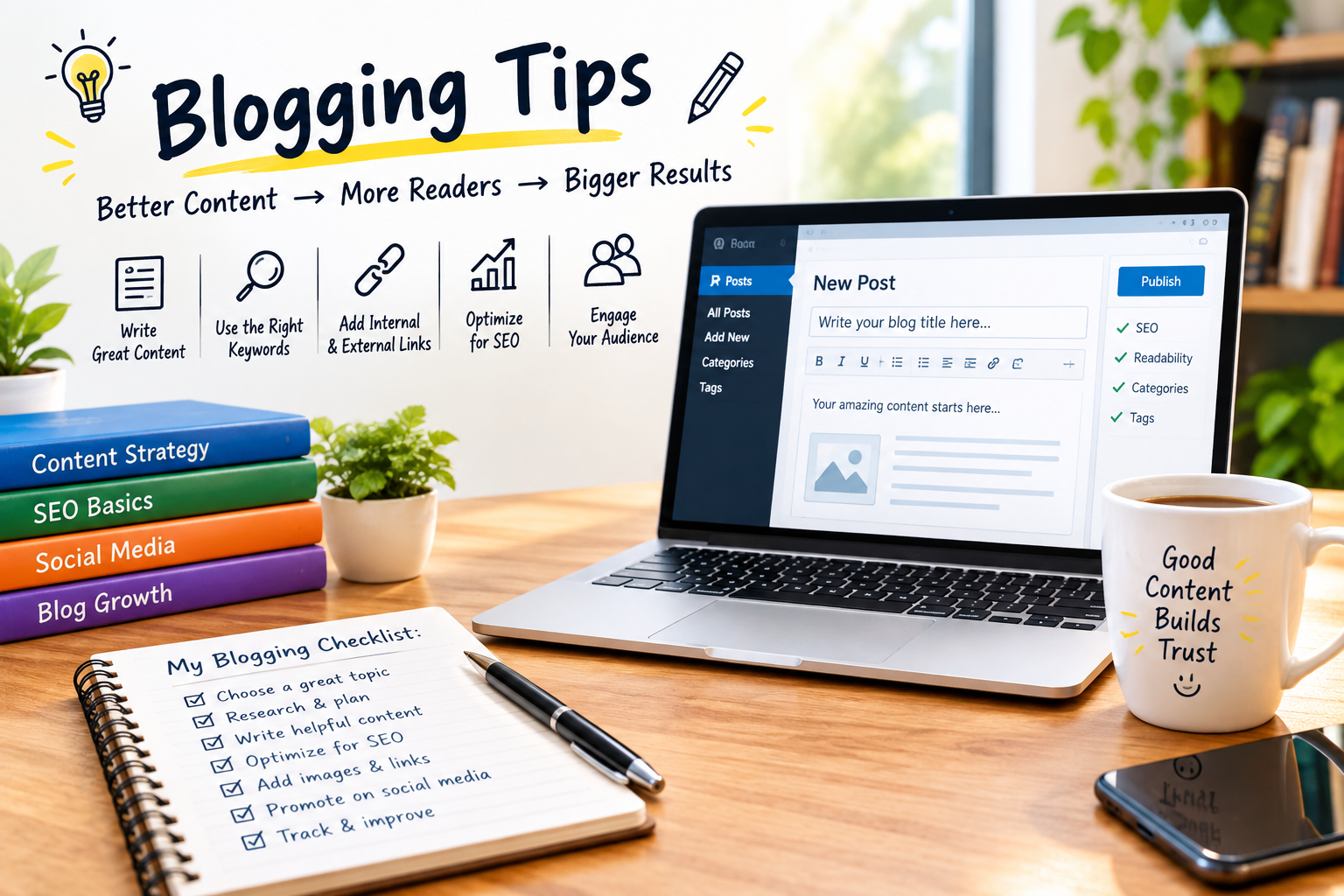
Discover 15 practical blogging tips for beginners to start, write, and grow a successful blog in 2026 — no tech skills or big budget required.
Introduction
Starting a blog feels exciting right up until you open a blank screen and realize you have no idea what to do first. That’s exactly where good blogging tips for beginners make the difference between a blog that fizzles out after three posts and one that turns into a real audience, a side income, or even a full-time career.
The truth is, blogging isn’t hard — it’s just easy to do in the wrong order. Most new bloggers spend weeks picking the “perfect” theme instead of writing their first post, or they publish content nobody searched for and wonder why traffic never comes. This guide walks you through 15 practical, no-fluff blogging tips for beginners, covering everything from choosing a niche to writing content that ranks, so you can start and grow a successful blog without wasting time on what doesn’t matter.
Whether you’re starting a personal blog, a niche website, or a business blog, these tips apply.
Why These Blogging Tips for Beginners Actually Matter
Before jumping into the list, it helps to understand why structure matters so much when you’re new. A blog isn’t a single decision — it’s a series of small, compounding choices: your niche, your platform, your writing habits, your SEO, and your promotion strategy. Get the early ones right, and everything after gets easier. Get them wrong, and you’ll spend months redoing work you could have avoided.
That’s the whole point of following proven blogging tips for beginners instead of guessing: you skip the expensive trial-and-error phase that trips up most new bloggers.
15 Blogging Tips for Beginners to Start and Grow a Successful Blog
1. Pick a Niche You Can Write About for Years
Your niche is the topic your blog will be known for — think personal finance, home cooking, fitness, parenting, or tech reviews. New bloggers often pick a niche based on what’s “trending” instead of what they can sustain.
Ask yourself:
- Do I know enough about this topic to write 50+ posts without running dry?
- Would I still enjoy writing about this in a year?
- Is there an audience actively searching for this topic?
A niche that’s too broad (like “lifestyle”) makes it hard to build authority. A niche that’s too narrow can limit growth. Aim for a focused topic with room to branch into related subtopics.
2. Choose the Right Blogging Platform
Your platform affects how much control, flexibility, and monetization potential your blog has. For most beginners, self-hosted WordPress remains the most flexible option because it isn’t limited the way free hosted platforms are.
| Platform | Best For | Ownership | Monetization |
|---|---|---|---|
| WordPress.org (self-hosted) | Long-term, serious blogs | Full ownership | Unlimited |
| WordPress.com (hosted) | Quick starters, simple blogs | Limited on free plan | Restricted on free plan |
| Medium | Writers wanting instant audience | No ownership of domain | Limited |
| Wix / Squarespace | Visual-first blogs | Full ownership | Good |
If you’re serious about growing your blog long-term, self-hosted WordPress gives you the most room to scale.
3. Get a Custom Domain Name
A custom domain (yourblogname.com) instantly makes your blog look more credible than a free subdomain like yourblog.wordpress.com. Keep it:
- Short and easy to spell
- Free of numbers, hyphens, or confusing spelling
- Relevant to your niche, but not so specific you can’t expand later
Buy your domain from a reputable registrar and renew it early — losing a domain you’ve built traffic on is a painful (and avoidable) mistake.
4. Understand Your Reader Before You Write
One of the most overlooked blogging tips for beginners is this: write for one specific reader, not “everyone.” Before writing a single post, define:
- Who is reading this? (age, interests, problem they’re facing)
- What question are they typing into Google?
- What do they need to walk away knowing or able to do?
This single shift — writing to solve a real problem instead of just sharing information — is what separates blogs that rank and get shared from blogs that don’t.
5. Plan Content Around Search Intent, Not Just Keywords
Keywords matter, but matching search intent matters more. If someone searches “how to start a blog,” they want a step-by-step guide — not a sales pitch for your course. Before writing, check what’s already ranking for your target keyword and ask: is this a “how-to,” a list, a comparison, or a review? Match that format.
6. Write Clear, Scannable Content
Most readers skim before they read. Structure every post so a skimmer can still get value:
- Use short paragraphs (2–4 sentences)
- Break up sections with H2 and H3 headings
- Use bullet points and numbered lists for steps
- Bold key phrases sparingly to guide the eye
Long, unbroken walls of text are one of the fastest ways to lose a reader in the first ten seconds.
7. Nail Your Headlines
Your headline decides whether someone clicks or scrolls past. A strong blog headline usually includes a number, a clear benefit, or a specific outcome — for example, “15 Blogging Tips for Beginners” tells the reader exactly what they’ll get and how much of it. Avoid vague titles like “My Thoughts on Blogging” — they don’t tell search engines or readers what the post is about.
8. Learn Basic On-Page SEO
You don’t need to be an SEO expert to rank — you need to cover the basics consistently:
- Use your focus keyword in the title, first 100 words, at least one subheading, and the conclusion
- Write a meta description under 160 characters that includes your keyword
- Use descriptive URLs (short, keyword-relevant slugs)
- Add alt text to every image
- Link to relevant internal and external pages
Google’s own guidance on creating helpful, people-first content recommends self-assessing your posts against E-E-A-T (Experience, Expertise, Authoritativeness, Trustworthiness) before you hit publish — it’s a reliable way to check whether a post is genuinely useful, not just keyword-optimized.
9. Use Internal Linking Strategically
Internal links guide readers deeper into your site and help search engines understand how your content is connected. Every time you publish a new post, link it to 2–3 relevant older posts, and update those older posts to link back. This keeps readers on your site longer and spreads authority across your blog instead of leaving posts isolated.
10. Publish Consistently, Not Perfectly
New bloggers often chase perfection on every post and end up publishing once a month. A consistent schedule — even one solid post a week — builds momentum faster than sporadic “perfect” posts. Set a realistic frequency you can actually sustain, and use a simple content calendar to stay on track.
11. Invest in a Few Genuinely Good Images
You don’t need a professional photographer, but you do need visuals that make posts easier to follow and more shareable. Use:
- One relevant featured image per post
- Simple diagrams or screenshots for how-to content
- Compressed image files so your blog loads fast
Every image should have descriptive alt text — it helps accessibility, SEO, and image search visibility all at once.
12. Build an Email List From Day One
Search traffic and social traffic can fluctuate, but an email list is an audience you own. Add a simple newsletter signup to your blog early, even before you have a large audience. Offer something useful — a short guide, checklist, or template — in exchange for the subscription. This becomes one of your most valuable long-term assets.
13. Promote Every Post You Publish
Publishing isn’t the finish line — it’s the starting line. For every hour spent writing, spend real time promoting:
- Share on the social platforms your readers actually use
- Engage genuinely in blog comments and niche communities — Pixwox’s guide to good blog comments is a useful starting point for writing comments that build relationships instead of getting flagged as spam
- Reach out to other bloggers in your niche for guest posts or collaborations
- Repurpose posts into short social snippets or newsletter content
14. Track What’s Working (and Fix What Isn’t)
Use a free tool like Google Analytics and Google Search Console to see which posts get traffic, where readers drop off, and which keywords are already bringing visitors close to page one. Doubling down on what’s already working is often more effective than constantly creating new content from scratch.
15. Be Patient — Blogging Is a Long Game
Most successful blogs take 6–12 months of consistent effort before traffic and income start to compound. The bloggers who succeed aren’t necessarily the most talented writers — they’re the ones who kept publishing, learning, and improving after the first few months of slow results. This patience is the most underrated of all blogging tips for beginners, because it’s the one that keeps people going when the early results feel discouraging.
Common Mistakes Beginners Make (and How to Avoid Them)
| Mistake | Why It Hurts | Fix |
|---|---|---|
| Writing for search engines, not readers | Low engagement, high bounce rate | Solve a real problem first, optimize second |
| Ignoring mobile readers | Most blog traffic is mobile | Use a responsive, fast-loading theme |
| Skipping keyword research | Content nobody searches for | Check search volume and intent before writing |
| Inconsistent publishing | Loses momentum and readers | Set a realistic, sustainable schedule |
| No internal linking | Poor site structure, lost SEO value | Link related posts to each other |
How Long Does It Take to Grow a Blog?
There’s no fixed timeline, but a realistic pattern looks like this:
- Months 1–3: Setting up, finding your voice, low traffic
- Months 4–6: Early search traffic begins, some posts start ranking
- Months 6–12: Traffic compounds if you’ve stayed consistent
- Year 1+: Established blogs with 50+ quality posts often see steady, ongoing growth
Following solid blogging tips for beginners from the start shortens this timeline because you avoid the rework that comes from fixing mistakes later.
Conclusion
Starting a blog doesn’t require perfect writing, expensive tools, or years of experience — it requires a clear plan and the consistency to follow it. These 15 blogging tips for beginners cover the full journey: picking a sustainable niche, setting up the right platform, writing content that actually helps readers, applying basic SEO, and promoting your work so it gets seen. Pick two or three tips to focus on this week, apply them to your next post, and build from there. The bloggers who succeed aren’t the ones who had it all figured out on day one — they’re the ones who kept showing up.
FAQs
1. What are the most important blogging tips for beginners to follow first?
Start by picking a sustainable niche, choosing a reliable platform like self-hosted WordPress, and publishing consistently. These three fundamentals matter more early on than advanced SEO or design tweaks.
2. How much does it cost to start a blog?
A basic blog can be started for around the cost of a domain name and hosting plan, often under $100 for the first year. Free platforms exist too, but they limit customization and monetization.
3. Do I need to know how to code to start a blog?
No. Platforms like WordPress.org offer drag-and-drop page builders and pre-made themes, so you can launch a professional-looking blog without touching code.
4. How often should beginners publish new blog posts?
Consistency matters more than frequency. One well-researched post per week is more effective long-term than five rushed posts published once and then abandoned.
5. How long does it take for a new blog to start getting traffic?
Most new blogs start seeing meaningful search traffic between months 4 and 6, with steady growth continuing through the first year if you publish consistently and apply basic SEO.
6. What’s the biggest mistake beginner bloggers make?
Writing content based on personal opinion instead of what readers are actually searching for. Matching search intent is one of the most impactful blogging tips for beginners to apply immediately.
7. Can I make money from blogging as a beginner?
Yes, through methods like display ads, affiliate marketing, sponsored content, or selling your own products or services — but monetization usually works best after you’ve built consistent traffic and trust with your audience.