
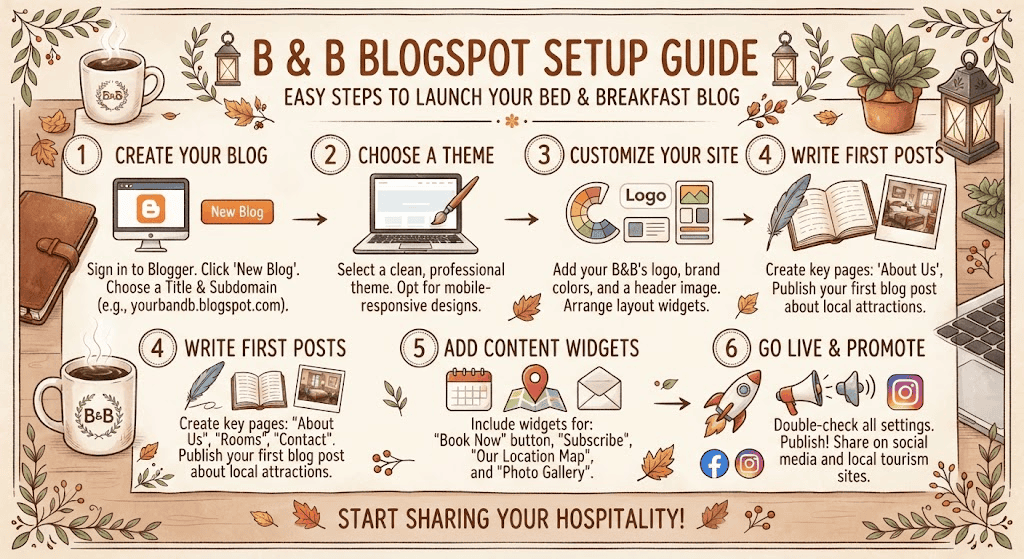
Learn how to use B and B Blogspot to start a blog in 2026. Discover blog ideas, setup steps, SEO tips, content strategies, monetization, and growth tips.
Introduction
Starting a blog can be one of the simplest ways to share knowledge, build an online presence, develop writing skills, and potentially create a source of income. You do not need to be an experienced developer to get started. With a blogging platform, a useful topic, and a consistent content strategy, beginners can build a blog from the ground up.
If you are searching for B and B Blogspot, you may be looking for information about starting a Blogspot blog, setting up your website, choosing topics, publishing articles, and growing an audience.
Blogging in 2026 is about more than simply publishing random articles. Readers want useful, original, easy-to-understand information, while search engines increasingly focus on content that satisfies the purpose behind a search.
This guide explains how beginners can approach B and B Blogspot, from choosing a niche and creating the blog to publishing content, improving SEO, promoting articles, and exploring monetization opportunities.
What Is B and B Blogspot?
B and B Blogspot is the focus term used in this guide for beginners interested in creating and managing a Blogspot-based website.
Blogspot is commonly associated with Blogger, Google’s blogging platform. It allows users to create and publish blog content without needing to build a complete website from scratch.
A beginner can use a blogging platform to:
- Publish articles
- Add images
- Organize posts
- Customize a blog
- Build an audience
- Connect a custom domain
- Improve search visibility
- Promote content
- Explore suitable monetization methods
The important thing is not simply creating a blog. The real challenge is producing content that gives readers a reason to visit and return.
Why Start a Blog in 2026?
Blogging remains useful because people continue to search online for answers, tutorials, reviews, explanations, comparisons, and practical information.
A blog can support several long-term goals.
1. Build an Online Presence
A blog gives you a place where you can publish your ideas and demonstrate your knowledge.
For example, someone interested in technology can create articles about apps, software, smartphones, artificial intelligence, and online tools.
2. Improve Your Writing Skills
Regular blogging can help you become better at:
- Researching topics
- Explaining complicated ideas
- Structuring information
- Writing headlines
- Editing articles
- Communicating with different audiences
3. Create a Portfolio
A collection of useful articles can act as a public writing portfolio.
This can be particularly useful for freelance writers, students, marketers, designers, and technology enthusiasts.
4. Build an Audience
A focused blog can attract readers who are interested in the same subject.
Over time, visitors can become subscribers, social followers, customers, or regular readers.
5. Explore Online Income
Depending on the topic and audience, a blog may eventually support:
- Display advertising
- Affiliate marketing
- Sponsored content
- Digital products
- Online services
- Memberships
- Consulting
- Courses
Income is not guaranteed, and a new blog normally needs time to build useful content and traffic.
How to Start B and B Blogspot in 2026
Starting a blog becomes much easier when you divide the process into simple steps.
Step 1: Choose a Clear Blogging Niche
Your first decision should be what your blog will cover.
A niche is a specific subject area that helps define your audience.
Popular possibilities include:
- Technology
- Blogging
- Digital marketing
- Education
- Travel
- Food
- Personal finance
- Lifestyle
- Photography
- Artificial intelligence
- Productivity
- Social media
- Online tools
You do not necessarily need an extremely narrow topic.
For example, instead of creating a blog about everything related to technology, you could focus on beginner-friendly technology guides.
A focused topic makes it easier to plan articles and build topical authority.
Step 2: Understand Your Target Audience
Before publishing your first article, ask:
Who am I writing for?
Your audience might be:
- Complete beginners
- Students
- Small business owners
- Freelancers
- Bloggers
- Travelers
- Technology users
- Digital marketers
Knowing your audience changes the way you write.
A beginner audience generally benefits from simple explanations, examples, screenshots, definitions, and step-by-step instructions.
Step 3: Choose a Blog Name
Your blog name should be easy to remember and relevant to your overall subject.
A good name should ideally be:
- Short
- Easy to spell
- Easy to pronounce
- Relevant to your niche
- Flexible enough for future content
Avoid choosing a name that limits you unnecessarily.
For example, if you plan to write about general technology, choosing a name that contains only one specific smartphone model could make expansion difficult later.
Step 4: Create Your Blog
Once you have selected your topic and name, create your Blogger blog.
A typical setup process involves signing in with a Google account, creating a blog, selecting a title, choosing an available blog address, and selecting a template.
Your initial design does not need to be perfect.
Focus first on:
- A readable layout
- Simple navigation
- Clear headings
- Mobile-friendly presentation
- Fast-loading pages
- Easy access to important pages
You can improve the design as your blog develops.
Step 5: Create Essential Pages
A professional blog should contain important information beyond individual posts.
About Page
Explain who operates the blog, what subjects it covers, and what readers can expect.
Contact Page
Give readers an appropriate way to contact you.
Privacy Policy
Explain relevant information about privacy, cookies, analytics, advertising, or other technologies used by your website.
Terms and Conditions
Depending on your website and business model, you may also want terms explaining how your content and services can be used.
Step 6: Create a Content Strategy
One of the biggest mistakes beginners make is publishing articles without a plan.
Instead, create a basic content calendar.
For example:
| Day | Content |
|---|---|
| Monday | Beginner guide |
| Wednesday | How-to article |
| Friday | Tips article |
| Sunday | FAQ or comparison |
You do not have to publish every day.
Consistency is more realistic than creating ten articles in one week and then stopping for a month.
Step 7: Find Useful Blog Topics
Good topics solve problems.
Instead of asking:
What can I write about?
Ask:
What does my audience want to know?
For a blogging website, possible topics include:
- How to start a blog
- How to choose a blogging niche
- How to write a blog post
- How to find blog topics
- How to create SEO-friendly headlines
- How to improve old blog posts
- How to promote a new article
- How to build internal links
- How to write better introductions
- How to create a content calendar
For other niches, use the same principle.
Find questions people actually ask and provide useful answers.
Step 8: Research Keywords
Keyword research helps you understand the words and phrases people use when searching.
For example, someone interested in blogging might search for:
- how to start a blog
- blogging tips for beginners
- how to write a blog post
- blog SEO tips
- best blogging platforms
- how to get blog traffic
Do not choose keywords only because they have high search volume.
Consider:
- Search intent
- Competition
- Relevance
- Audience needs
- Your ability to provide a better answer
Long-tail keywords can be particularly useful for new websites because they often describe more specific searches.
Step 9: Write Helpful Articles
A successful blog needs useful content.
A simple article structure could be:
- Clear title
- Introduction
- Direct answer
- Main explanation
- Practical steps
- Examples
- Common mistakes
- Frequently asked questions
- Conclusion
Avoid writing paragraphs simply to increase word count.
A 1,500-word article that completely answers a question can be more useful than a 3,000-word article filled with repetition.
Step 10: Use the Focus Keyword Naturally
If B and B Blogspot is your target keyword, include it where it makes sense.
Potential locations include:
- SEO title
- Introduction
- One or more headings
- Main article
- FAQ
- Image ALT text
- Conclusion
- Meta description
However, do not repeat the keyword in every paragraph.
Search engines are designed to understand topics and related concepts, so naturally written content is more important than mechanical repetition.
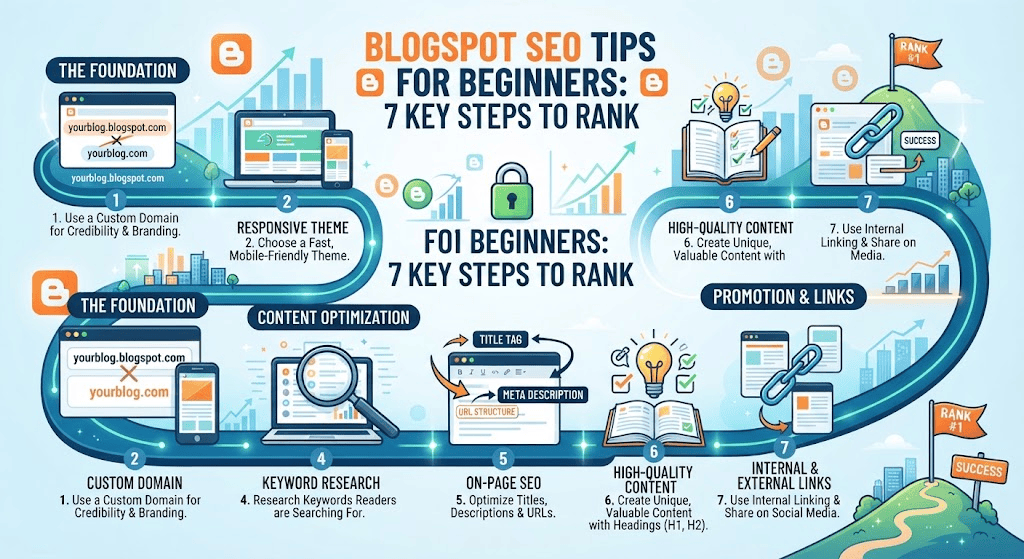
Step 11: Optimize Your Blog Posts for SEO
Search engine optimization helps search engines understand your content and helps users discover it.
Important areas include:
Title
Create a clear title that explains what the article provides.
Headings
Use H2 and H3 headings to organize information.
Introduction
Answer the reader’s basic question early.
Internal Links
Link to other relevant articles on your website.
External Sources
When appropriate, link to reliable sources that support important information.
Images
Use relevant images and descriptive ALT text.
URL
Keep URLs short, descriptive, and readable.
Mobile Experience
Make sure visitors can comfortably read your website on smartphones.
B and B Blogspot and Internal Linking
Internal linking is one of the easiest SEO practices beginners can overlook.
An internal link connects one page of your website to another page on the same website.
For example, if you publish an article about blogging tips, you could link it to another article about writing better blog posts.
This can help readers discover related information and help search engines understand relationships between pages.
For Pixwox readers, the Blogging Tips category can be a useful destination for related blogging content.
When adding internal links, use descriptive anchor text rather than generic phrases such as “click here.”
Step 12: Add Images to Your Articles
Images can make long articles easier to understand.
Useful image types include:
- Featured images
- Step-by-step screenshots
- Infographics
- Diagrams
- Topic illustrations
- Original graphics
However, do not use copyrighted images without permission.
Whenever possible, use images you created yourself or images that are properly licensed for your intended use.
For SEO, write descriptive ALT text that explains the image.
Step 13: Make Your Blog Easy to Navigate
Navigation matters because readers should be able to find important information quickly.
A basic navigation menu might include:
- Home
- Blogging Tips
- Guides
- About
- Contact
If your blog grows significantly, you can create additional categories.
Avoid creating dozens of categories with only one or two articles each.
Step 14: Promote Your New Articles
Publishing an article does not automatically guarantee visitors.
Promotion can help your content reach its intended audience.
Consider:
Social Media
Share useful articles on relevant social platforms.
Communities
Participate in online communities where your topic is discussed. Follow community rules and avoid spam.
Build an email list if your audience is interested in receiving new articles or updates.
Networking
Connect with other bloggers and creators in your niche.
Helpful Discussions
Answer questions in forums and communities when you can genuinely help.
Promotion should focus on providing value rather than repeatedly posting the same link.
Step 15: Use Google Search Console
Google Search Console can help website owners understand how their pages perform in Google Search.
You can use it to investigate areas such as:
- Search queries
- Search impressions
- Clicks
- Indexing
- Search performance
- Website issues
For a new blog, Search Console can become an important part of monitoring organic search visibility.
Step 16: Learn From Your Analytics
Traffic numbers alone do not tell the whole story.
Pay attention to:
- Which pages receive visitors
- Which topics attract search traffic
- Which articles generate engagement
- Where visitors come from
- Which pages need improvement
Suppose one article receives considerably more traffic than your other posts.
Instead of simply celebrating the traffic, investigate why it performs well.
You may discover that the topic has strong demand, the title matches search intent, or the article answers a specific question particularly well.
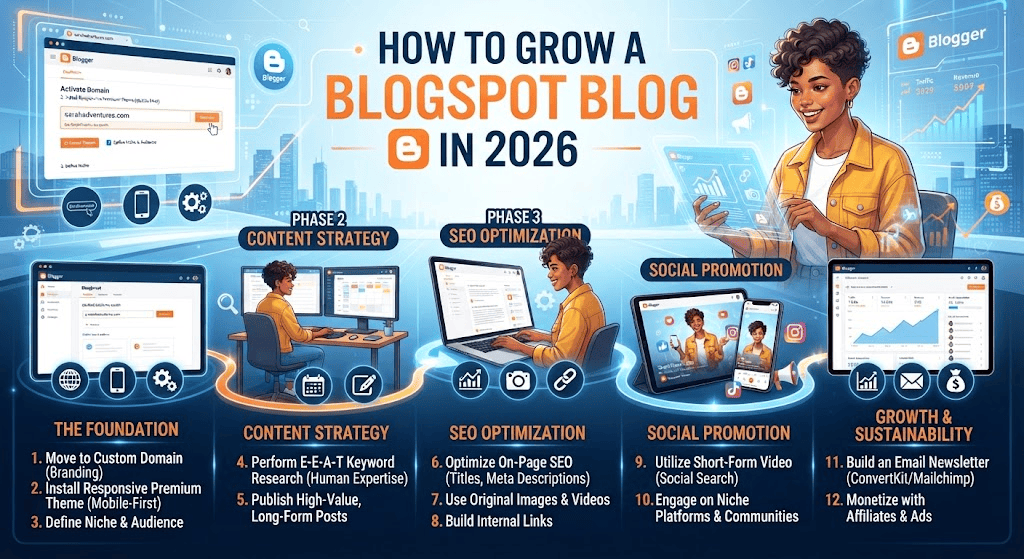
How to Grow B and B Blogspot Over Time
Growing a blog is a long-term process.
Instead of focusing only on publishing more articles, improve the quality of your entire website.
Build Topic Clusters
Suppose your main topic is blogging.
You might create a central guide about starting a blog and then publish supporting articles about:
- Blog writing
- Keyword research
- Blog SEO
- Internal linking
- Content calendars
- Blog promotion
- Blogging mistakes
- Monetization
Link related articles together.
This creates a useful content network.
Update Older Content
Do not assume an article is finished forever after publication.
Information changes.
An older article may contain:
- Outdated screenshots
- Old statistics
- Broken links
- Outdated recommendations
- Old platform features
Review important articles periodically.
Update information when necessary and improve sections that are no longer useful.
Common Blogging Mistakes Beginners Should Avoid
1. Choosing Too Many Topics
A blog about technology, recipes, travel, sports, finance, and celebrity news may struggle to establish a clear identity.
A focused content strategy is usually easier to manage.
2. Copying Other Websites
Do not simply rewrite another website’s article.
Research multiple sources, understand the subject, and produce original explanations.
3. Keyword Stuffing
Repeating a keyword unnaturally can make an article difficult to read.
Use keywords naturally and cover the topic comprehensively.
4. Ignoring Search Intent
A person searching “how to start a blog” wants a practical guide.
A short promotional paragraph will not satisfy that intent.
5. Publishing Without Editing
Always review your article before publishing.
Check:
- Grammar
- Spelling
- Headings
- Links
- Images
- Formatting
- Facts
- Mobile readability
6. Expecting Instant Traffic
Blogging is not normally an overnight success strategy.
A new website may require time and consistent work before meaningful organic traffic develops.
7. Ignoring Readers
Do not write only for search engines.
Your ultimate audience is the person reading the article.
Can You Make Money With B and B Blogspot?
A blog can potentially generate income, but results vary significantly.
Possible monetization methods include:
Display Advertising
Advertising networks can place advertisements on eligible websites.
Affiliate Marketing
You can recommend relevant products or services and potentially earn a commission when qualifying purchases occur through your referral.
Sponsored Content
Some businesses pay publishers for sponsored articles or other promotional content.
Digital Products
Depending on your expertise, you might sell:
- Ebooks
- Templates
- Checklists
- Courses
- Design resources
Services
A blog can also attract clients for services such as:
- Writing
- SEO
- Consulting
- Design
- Marketing
The best monetization method depends heavily on your niche and audience.
A Simple 90-Day Blogging Plan
Days 1–30: Foundation
Focus on:
- Choosing your niche
- Creating your blog
- Selecting a simple design
- Creating essential pages
- Researching keywords
- Publishing your first 5–10 useful articles
Days 31–60: Content Growth
During the second month:
- Publish additional articles
- Build topic clusters
- Add internal links
- Improve older posts
- Create useful images
- Start promoting your content
- Monitor search performance
Days 61–90: Optimization
During the third month:
- Identify your strongest articles
- Improve weak pages
- Improve introductions
- Add relevant internal links
- Fix broken links
- Study search queries
- Develop your next content plan
Frequently Asked Questions About B and B Blogspot
What is B and B Blogspot?
B and B Blogspot is the focus term used in this guide for beginners interested in creating and growing a Blogspot-based blog. The process involves choosing a niche, setting up a blog, publishing useful content, improving SEO, and building an audience.
Is Blogspot suitable for beginners?
Yes. Blogger is designed to make blogging accessible without requiring advanced web-development skills.
How much does it cost to start a Blogspot blog?
You can begin blogging without purchasing expensive hosting. Costs may vary if you choose to purchase a custom domain or additional resources.
How many articles should a new blog publish?
There is no universal number. Quality, relevance, and consistency are more important than hitting a specific publishing target.
How long does it take to get blog traffic?
There is no guaranteed timeline. Search visibility depends on factors such as content quality, competition, topic demand, website history, links, and search intent.
Can a Blogspot blog make money?
A blog can potentially be monetized through advertising, affiliate marketing, sponsored content, products, or services. Results and eligibility vary.
Should beginners use a custom domain?
A custom domain can provide a more independent and professional web identity. Whether you need one immediately depends on your goals and budget.
Is SEO necessary for blogging?
SEO can help search engines discover and understand your content. However, SEO should support useful content rather than replace it.
Final Thoughts
Starting a blog in 2026 does not require you to be a professional developer or experienced writer.
What you need is a clear topic, a defined audience, useful content, patience, and a willingness to learn.
B and B Blogspot can be approached as a starting point for learning the fundamentals of blogging, from choosing a niche and publishing your first article to improving SEO and building an audience.
Create useful content, make your articles easy to read, answer genuine questions, connect related resources, monitor your results, and improve older content.
Treat blogging as a long-term project and focus on creating a website that becomes more useful with every new article.