
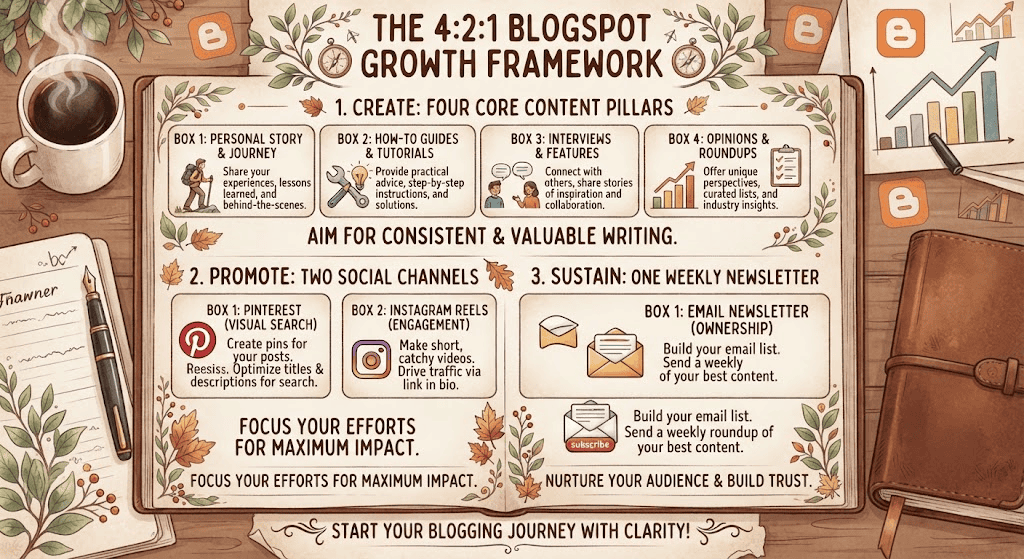
Learn how 421 Blogspot works in 2026, how to create a blog, choose a niche, publish posts, optimize SEO, customize your site, and grow an audience.
Introduction
Starting a blog no longer requires advanced coding skills, expensive software, or a complicated publishing system. Platforms such as Blogger have made it possible for beginners to create a website, publish articles, add images, customize a design, and gradually build an audience.
But if you are searching for 421 Blogspot, you may be looking for more than a basic explanation of what blogging is. You may want to understand how to start, what settings matter, how to publish your first article, how to make the site look professional, and how to give your content a better chance of being discovered through search engines.
That is where this guide comes in.
The term 421 Blogspot can be approached as a keyword or topic associated with Blogspot/Blogger-style blogging. The practical principles remain the same: choose a useful subject, create a recognizable blog identity, publish original content, optimize your pages, and build a consistent publishing routine.
Google’s official Blogger documentation confirms that users can create a blog by choosing a name and blog address, then manage posts, pages, themes, settings, comments, search visibility, and other features from the Blogger dashboard.
Whether you’re creating a personal blog, educational website, hobby publication, niche website, or small business blog, the steps below will help you build a solid foundation.
Quick Answer: What Is 421 Blogspot?
421 Blogspot can be used as a search term for people interested in starting or learning about a Blogspot/Blogger website. Blogspot is commonly associated with Google’s Blogger publishing platform, which lets users create and manage blogs without building a website from scratch.
The basic process is straightforward:
- Choose a blogging topic.
- Create a Blogger account.
- Select a blog name.
- Choose a blog address.
- Select a suitable theme.
- Create important pages.
- Publish useful posts.
- Configure search visibility.
- Optimize titles, URLs, headings, and images.
- Promote useful content and monitor results.
The technology is only one part of the process. Your niche, content quality, audience understanding, and consistency will have a major influence on how the website develops.
What Is Blogspot and How Does It Work?
Blogspot is the domain commonly associated with blogs created through Google’s Blogger platform. Blogger provides the publishing tools, while Blogspot addresses can be used for blogs hosted through the service.
Instead of purchasing hosting and installing a content management system yourself, you can create a blog through Blogger and manage it from Google’s platform.
According to Google’s current Blogger help documentation, creating a blog involves signing in, selecting New blog, entering a name, choosing a blog address or URL, and saving the blog.
This makes Blogger particularly accessible to people who want to concentrate on writing rather than managing server infrastructure.
A typical Blogger website can contain:
- Blog posts
- Static pages
- Categories or labels
- Images
- Navigation menus
- Sidebar gadgets
- Custom themes
- Comments
- Search settings
- Custom domains
- Analytics integrations
The exact appearance and available settings can vary depending on the theme and configuration.
1. Decide What Your 421 Blogspot Website Will Be About
Before creating the website, decide what you want to publish.
A common beginner mistake is choosing an extremely broad subject.
For example, “technology” includes thousands of possible topics. A more focused website could cover:
- Android tutorials
- AI tools for students
- Smartphone photography
- Blogging guides
- Social media tutorials
- Website SEO
- Online productivity
A focused topic makes it easier to understand your target reader and create related articles.
Ask yourself three questions:
What do I know?
Choose a subject you understand or are willing to research carefully.
What do people need?
Look for questions, problems, and information gaps that your content can address.
Can I keep publishing about it?
A good topic should give you enough ideas for dozens of useful articles.
Your first goal isn’t to cover the entire internet. It is to become useful to a specific group of readers.
2. Choose a Memorable Blog Name
Your blog name becomes part of your online identity.
A good name should be:
- Easy to remember
- Easy to spell
- Relevant to your subject
- Reasonably short
- Distinctive
- Suitable for future growth
Avoid names that are difficult to pronounce or contain unnecessary numbers and symbols unless they are part of your brand.
If your blog is about technology, for example, a name connected with technology, tutorials, apps, or digital tools may communicate the site’s purpose more clearly than a completely unrelated name.
Don’t spend weeks trying to create a perfect name. A clear, usable name is more important than endlessly searching for an ideal one.
3. Create Your 421 Blogspot Blog
Once you know your subject and name, you can create the blog.
Google’s current instructions are simple: sign in to Blogger, select New blog, enter the name, choose the blog address, and save.
Your blog address is important because it becomes part of your site’s identity.
If the address you want is unavailable, try a variation that remains easy to remember.
Before publishing content, open the blog and check it from a visitor’s perspective.
Ask:
- Does the homepage load correctly?
- Is the title visible?
- Is the navigation understandable?
- Can visitors find your posts?
- Does the site work properly on a phone?
- Are important pages easy to access?
Fix basic presentation issues before publishing dozens of articles.
4. Choose a Clean Blogger Theme
Your theme determines much of the site’s visual appearance.
Blogger currently provides built-in theme options that can be selected and customized from the Theme section. Google also documents customization options for elements such as backgrounds, fonts, colors, and other design settings.
For a beginner website, choose a design that prioritizes readability.
Look for:
- Clear typography
- Good contrast
- Simple navigation
- Responsive design
- Easy-to-read article pages
- Limited distractions
- Clear sidebar or menu structure
Don’t overload the website with animations, unnecessary widgets, or excessive advertising.
Your content should remain the main attraction.
5. Configure the Basic 421 Blogspot Settings
After creating the blog, review the settings before publishing heavily.
Blogger provides settings for the blog title, description, language, favicon, comments, formatting, search description, redirects, crawling and indexing options, and other functions.
Pay particular attention to:
Blog Title
Use a clear name that represents the site’s identity.
Blog Description
Write a concise explanation of what readers will find on the website.
Language
Choose the language you primarily use for your content.
Favicon
A recognizable favicon can make your site look more polished in browser tabs.
Comments
Decide whether you want comments enabled and whether moderation is necessary.
Search Description
Write a useful description that accurately summarizes the site’s purpose.
Don’t change advanced settings simply because they exist. If you don’t understand an indexing or crawler setting, research it first.
6. Create Essential Pages
A new blog should not consist only of articles.
Create useful static pages such as:
- About
- Contact
- Privacy Policy
- Terms and Conditions
- Disclaimer
Depending on your website’s purpose, you may also create:
- Resources
- Services
- Advertise
- Editorial Policy
- Affiliate Disclosure
Google’s Blogger documentation explains that pages can be used for consistent information such as About and Contact pages and can be displayed as navigation links.
These pages also help visitors understand who operates the site and how they can contact you.
Internal link placement:
Link your About page from your site’s navigation and relevant author or editorial sections.
7. Plan Your First 10 Articles
Don’t launch with random content.
Create a small content plan first.
For example, if your niche is beginner blogging:
- How to Start a Blog
- How to Choose a Blog Niche
- How to Find Blog Topics
- How to Write a Blog Introduction
- Basic SEO for Beginners
- How to Write SEO-Friendly Articles
- How to Add Images to Blog Posts
- How to Promote a New Blog
- How to Build an Email List
- How to Update Old Blog Posts
This creates a foundation where articles can naturally link to each other.
Think about your site as a library rather than a collection of unrelated pages.
8. Research Keywords Before Writing
Keyword research helps you understand what your audience is searching for.
You don’t need to target the biggest keyword available.
Instead, identify specific questions and topics.
For example:
Broad topic: Blogging
More specific topics:
- How to start a blog for beginners
- How to write a blog post
- How to choose blog keywords
- How to promote a new blog
- Best blogging tools for beginners
Longer, specific searches can reveal clearer user intent.
When researching keywords, look at:
- Search intent
- Existing search results
- Related questions
- Competing articles
- Topic depth
- Potential audience value
Don’t create separate articles for every tiny keyword variation. If several searches represent the same underlying question, one comprehensive article may serve them better.
9. Write Helpful Content Instead of Keyword-Filled Articles
One of the biggest beginner SEO mistakes is writing for a search engine instead of a person.
A reader doesn’t want an article that repeats the same keyword twenty times.
They want an answer.
Start by understanding the question and then build the article around it.
A useful structure is:
Introduction → Quick answer → Detailed explanation → Examples → Practical steps → Common mistakes → FAQs → Conclusion
Use the target keyword naturally in:
- Title
- Introduction
- Relevant heading
- Body text
- Image alt text when appropriate
- Conclusion
But don’t force it into every heading.
Google’s Blogger guidance recommends using relevant keywords in titles and text, adding descriptive headers, and making images searchable through appropriate descriptions or alt text.
10. Optimize Your 421 Blogspot Posts for SEO
Basic on-page SEO doesn’t need to be complicated.
For each article, check:
Title
Make it descriptive and appealing.
URL
Use a short, readable URL related to the article.
Blogger supports custom post permalinks through the post settings.
Headings
Use H2 headings for major sections and H3 headings for subsections.
Images
Use descriptive filenames and accurate alt text.
Internal Links
Connect the article to relevant pages on your own site.
External Links
When useful, cite authoritative sources that provide additional information.
Readability
Use short paragraphs, lists, examples, and clear formatting.
SEO should support the reader experience rather than replace it.
11. Add Images With Proper Alt Text
Images make long articles easier to understand, but they should be relevant.
For this article, use the following featured-image setup:
Image filename:421-blogspot-beginners-guide.jpg
Alt text:421 Blogspot
Image title:421 Blogspot Beginner's Guide
Caption:A beginner-friendly guide to starting and growing a 421 Blogspot website in 2026.
Image description:Illustration representing 421 Blogspot, blogging, content creation, SEO, and website growth for beginners.
Google’s Blogger documentation specifically provides an option to add alt text to images.
Use accurate alt text. If an image contains a laptop displaying a blog dashboard, describe what the image actually shows rather than inserting unrelated keywords.
12. Build an Internal Linking System
Internal links are particularly useful when your website starts accumulating multiple articles.
Suppose you publish:
Article A: How to Start a Blog
Article B: Beginner SEO Guide
Article C: How to Write Blog Posts
Article D: Blog Keyword Research
You can connect them naturally.
For example:
Before writing your next article, learn how to perform keyword research for beginners.
Then link that phrase to Article D.
Internal links help visitors discover related information and make your website easier to navigate.
For this article, you can add internal links to existing Pixwox content where relevant, such as your Blogging Tips category:
Only add internal links where the destination genuinely supports the surrounding text.
13. Use Authoritative External Resources
External links can help readers verify information or continue learning.
For Blogger-specific instructions, Google’s official Blogger Help documentation is an appropriate reference.
Useful resources include:
For example, when explaining how to create a blog, link to the official Blogger instructions rather than an unrelated third-party tutorial.
External links should provide genuine value. Don’t add links simply to satisfy an SEO checklist.
14. Make Your Blog Discoverable in Search
A technically published blog isn’t automatically a successful blog.
Blogger provides a setting called Visible to search engines under Privacy. Google’s documentation also explains that relevant keywords, descriptive titles, headings, images, and readable URLs can help search engines understand your content.
After publishing your initial content:
- Make sure search visibility is enabled.
- Connect your site with Google Search Console.
- Publish useful content consistently.
- Monitor search impressions.
- Improve articles that receive impressions but few clicks.
- Build relevant internal links.
- Fix broken or outdated pages.
Avoid obsessing over rankings immediately after publishing. Search visibility can take time to develop.
15. Promote Your 421 Blogspot Content
Search engines are not the only source of visitors.
Share useful articles through channels where your target audience already spends time.
Depending on your niche, these might include:
- YouTube
- Email newsletters
- Online communities
- Industry forums
Don’t copy the same promotional message everywhere.
Instead, adapt your introduction to the platform.
For example, if you publish a detailed beginner guide, you might create a short checklist from the article for social media and direct interested readers to the full resource.
Promotion works best when the content genuinely solves a problem.
16. Use Labels to Organize Your Content
As your website grows, organization becomes increasingly important.
Blogger allows you to use labels to categorize posts. The mobile publishing documentation also describes adding labels when creating or publishing posts.
For example, a blogging website could use labels such as:
- Blogging Tips
- SEO
- Content Writing
- WordPress
- Blogger
- Social Media
- Online Marketing
Don’t create dozens of nearly identical labels.
Use a small, logical taxonomy that helps readers find related content.
17. Make Your 421 Blogspot Website Mobile-Friendly
Many readers access websites from smartphones.
Before publishing an article, check the page on:
- Android phones
- iPhones
- Tablets
- Desktop browsers
Look for:
- Text that is too small
- Images extending beyond the screen
- Difficult menus
- Overlapping widgets
- Slow-loading elements
- Excessive advertisements
- Difficult-to-click links
A beautiful desktop design isn’t useful if the article becomes difficult to read on a phone.
Keep the design simple and content-focused.
18. Build Trust With Original and Transparent Content
A successful blog needs more than keywords.
Readers want to know why they should trust the information.
You can strengthen credibility by:
- Explaining your experience where relevant
- Linking to primary sources
- Updating outdated information
- Correcting errors
- Providing practical examples
- Separating facts from personal opinions
- Clearly identifying sponsored or affiliate content
- Maintaining an accessible Contact page
Don’t pretend to have personal experience you don’t have.
If you’re researching a subject, say so through the way you present the information and support factual claims with reliable sources.
19. Track What Works
After publishing enough articles, start reviewing your data.
Look for:
Pages Getting Impressions
These pages may have potential to attract more clicks with better titles or stronger content.
Pages Getting Clicks
Study what these articles do well.
Search Queries
Look for questions and topics that are already bringing visitors to your website.
Low-Performing Articles
Check whether the article matches search intent and whether it provides enough useful information.
Popular Topics
If one topic repeatedly performs well, consider creating related supporting articles.
Data should influence your future content planning, but don’t abandon your overall niche every time one article underperforms.
20. Update Older 421 Blogspot Articles
Your first version of an article doesn’t have to remain unchanged forever.
As information changes, revisit important pages.
Update:
- Old statistics
- Screenshots
- Broken links
- Outdated recommendations
- Examples
- Headings
- FAQs
- Internal links
Blogger also provides backup and import tools, allowing you to preserve and move content when needed. Google recommends backing up blog content and also provides options for backing up themes.
Keeping backups is especially important before making significant changes.
Common Mistakes Beginners Make
A new 421 Blogspot project can easily lose momentum because of a few avoidable mistakes.
Publishing Without a Niche
Random articles make it difficult to build topical depth.
Copying Other Websites
Copied content provides little reason for readers to choose your site.
Keyword Stuffing
Repeating the same phrase excessively makes writing unnatural.
Using Too Many Widgets
Every additional element can make a page more distracting.
Ignoring Mobile Users
A site that works poorly on smartphones can frustrate visitors.
Publishing and Forgetting
An article isn’t finished just because it has been published. It can be improved later.
Expecting Immediate Traffic
New websites generally need time to build content, visibility, and audience recognition.
How to Monetize a 421 Blogspot Website
Once a blog develops an audience, there are several possible monetization models.
Advertising
Display advertising can generate revenue based on eligible traffic and advertising arrangements.
Affiliate Marketing
You can recommend relevant products or services and potentially earn commissions when readers make qualifying purchases.
Sponsored Content
Businesses may pay for appropriate promotional content, provided it is clearly disclosed.
Digital Products
A blog can support products such as:
- Ebooks
- Templates
- Courses
- Checklists
- Design resources
Services
If your content demonstrates expertise, your blog can help generate leads for services such as:
- Writing
- SEO
- Consulting
- Web design
- Digital marketing
Don’t add monetization before understanding your audience. A website overloaded with advertisements can create a poor experience.
Is 421 Blogspot Still Useful in 2026?
A beginner-focused blogging platform can still be useful when the primary goal is publishing content without managing complex hosting infrastructure.
Blogger continues to provide core blogging functions, including publishing, themes, pages, comments, search settings, analytics-related settings, custom domains, backups, and other management features.
However, the platform is only part of the equation.
A blog succeeds because of the value it provides.
A well-researched article on a simple platform can be more useful than a beautifully designed website filled with weak content.
Focus first on:
- Audience
- Topic
- Content quality
- Search intent
- Website usability
- Consistency
- Improvement
Then worry about advanced customization.
A Simple 30-Day 421 Blogspot Launch Plan
If you’re starting from zero, don’t try to complete everything in one day.
Week 1: Foundation
- Choose your niche
- Select your blog name
- Create your Blogger website
- Choose a clean theme
- Configure basic settings
- Create About and Contact pages
Week 2: Content Planning
- Research 20–30 topics
- Identify long-tail keywords
- Group related topics
- Create your first content calendar
- Write your first two or three articles
Week 3: SEO and Publishing
- Optimize titles
- Create readable URLs
- Add descriptive headings
- Add relevant images
- Write accurate alt text
- Add internal links
- Publish consistently
Week 4: Promotion and Measurement
- Set up Search Console
- Share your articles
- Review early impressions
- Check mobile usability
- Improve weak pages
- Plan the next month’s content
At the end of 30 days, you may not have a huge audience. That’s normal. The goal of the first month is to establish a system you can continue.
Final Thoughts
Starting 421 Blogspot in 2026 doesn’t need to be complicated.
The technical setup can be completed relatively quickly, but building a useful website requires ongoing work. Choose a focused topic, understand your readers, create genuinely helpful articles, and organize your content so visitors can easily move from one useful page to another.
Use Blogger’s built-in features for themes, pages, labels, settings, search visibility, and publishing. Google also provides official documentation for customizing themes, managing settings, improving search visibility, and backing up your content.
Most importantly, don’t measure your blog only by its first few weeks of traffic.
A new site needs time to develop its content library and establish an audience. Publish consistently, study your data, update older articles, and keep improving the experience for readers.
If you approach 421 Blogspot as a long-term publishing project rather than a quick traffic experiment, you’ll have a much clearer foundation for building your blog throughout 2026.
Frequently Asked Questions
What is 421 Blogspot?
421 Blogspot is the focus keyword used for this beginner’s guide to Blogspot/Blogger blogging. Blogspot is commonly associated with Google’s Blogger publishing platform, which allows users to create and manage blogs.
How do I start a 421 Blogspot website?
Sign in to Blogger, create a new blog, choose a name and blog address, select a theme, configure your settings, create essential pages, and begin publishing useful content. Google’s official instructions provide the current creation steps.
Is Blogspot free?
Blogger allows users to create blogs without managing traditional web hosting themselves. Costs can arise if you choose optional services such as a custom domain or other third-party tools.
Can I use a custom domain with Blogger?
Blogger supports custom-domain functionality. Check the current Blogger settings and official documentation for the latest setup requirements.
How can I optimize 421 Blogspot for SEO?
Start with clear titles, descriptive URLs, relevant headings, useful content, accurate image alt text, internal links, appropriate external references, and search visibility settings. Blogger’s official SEO guidance covers several of these areas.
How many posts should I publish each week?
There is no universal number. Choose a schedule you can maintain while keeping the content useful and accurate. One strong article can be more valuable than several rushed posts.
Can I make money with Blogspot?
A Blogger website can potentially support several monetization methods, depending on eligibility and applicable policies. These can include advertising, affiliate marketing, sponsored content, digital products, and services.
Should I buy a custom domain?
A custom domain can provide a more independent brand identity and can be useful if you plan to develop the website long term. Consider your goals and budget before purchasing one.
Can I change my Blogger theme later?
Yes. Blogger provides theme selection and customization features, and Google documents options for changing themes and customizing their appearance.
Can I back up my Blogspot content?
Yes. Blogger provides backup and import options for blog content, and Google also documents ways to back up themes.
How long does it take for a new Blogspot blog to get traffic?
There is no guaranteed timeline. Results depend on the niche, content quality, competition, search demand, promotion, website structure, and many other factors. Focus on building useful content and measuring progress rather than expecting a fixed traffic result by a specific date.
What should my first Blogspot article be about?
Choose a specific question or problem that your target audience wants solved. A focused beginner guide is often easier to create and promote than an extremely broad article.