

Best Time to Post on Instagram: The Complete Guide for 2026
Posting a great photo or Reel at the wrong hour is like opening a shop after your customers have gone home. The best time to post on Instagram is simply when your own followers are online, scrolling, and ready to engage — and that time differs for every account. This guide gives you the general patterns, shows you how to find your own peak hours in Instagram Insights, and explains how to test your timing so you stop guessing.
The short answer: for most accounts, weekday mornings between 9 and 11 a.m. and evenings between 7 and 9 p.m. (in your audience’s time zone) are a strong starting point, with Tuesday to Thursday the most reliable days. But those are averages, not rules — your own followers’ habits matter far more, and Instagram Insights shows exactly when they are active.
Why posting time matters on Instagram
Instagram shows a new post to a small group of your followers first. If they like, comment, save, or share it quickly, Instagram takes that as a sign to show it to more people. If the first viewers are asleep or busy, that early signal is weak, and the post may never reach the audience it deserved.
Timing cannot fix a weak post — a boring Reel will flop at any hour. But timing decides how many of your followers get the chance to see a good post while it is fresh. Good content times good timing reaches far more people than either one alone.
The best time to post on Instagram: general patterns
Social media scheduling platforms publish large annual studies of posting times, and while their exact numbers differ, the broad pattern is remarkably consistent year after year. Use these windows as a starting point, then check them against your own Insights.
Best hours on weekdays
Two windows come up again and again:
- Morning, 9 a.m. to 11 a.m. People check their phones after arriving at work or school, or during a mid-morning break. Posts in this window catch the late-morning scroll.
- Evening, 7 p.m. to 9 p.m. After dinner, people relax and scroll for longer — often the strongest window for Reels and longer captions.
- Lunch, 12 p.m. to 1 p.m. A smaller weekday peak, when people scroll while eating.
Best days to post
Tuesday, Wednesday, and Thursday are usually the most reliable days for engagement. Monday works well too, as people catch up after the weekend. Friday mornings are fine, but attention drops off in the afternoon.
Weekends are weakest for most business and educational accounts, but strong for entertainment, food, travel, and lifestyle content. If your audience is mostly teenagers or casual scrollers, a Saturday afternoon post can beat a Tuesday morning one.
Times to avoid
Late night, roughly 11 p.m. to 5 a.m., is the weakest window for almost every audience, because most followers are asleep. Very early morning, before 7 a.m., is also quiet, and Sunday mornings tend to be slow. A great post can still perform at those hours — but you start with a smaller audience awake to see it.
Best time to post Reels on Instagram
Reels behave slightly differently from photos and carousels. Because Reels are shown to people who do not follow you, through the Reels feed and Explore, their reach depends less on the exact minute you post and more on watch time and replays. Even so, timing helps: posting when your followers are online gives a Reel the early likes and comments that push it into wider distribution.
Evenings, between 7 and 9 p.m., are usually the strongest window for Reels, because people have time to watch videos with sound on. Lunch breaks work well too, and short, punchy Reels can do well during the morning commute. Avoid posting Reels very late at night unless your audience is in a time zone where it is evening.
Best time to post Instagram Stories
Stories sit at the top of the app and disappear after 24 hours, so timing is more forgiving — but there is still a pattern. Morning Stories catch people checking overnight updates, and evening Stories catch the after-dinner scroll. Many creators post several times a day: morning, afternoon, and evening. Spreading them through the day keeps you at the front of the Stories row.
How to find YOUR best time to post (Instagram Insights)
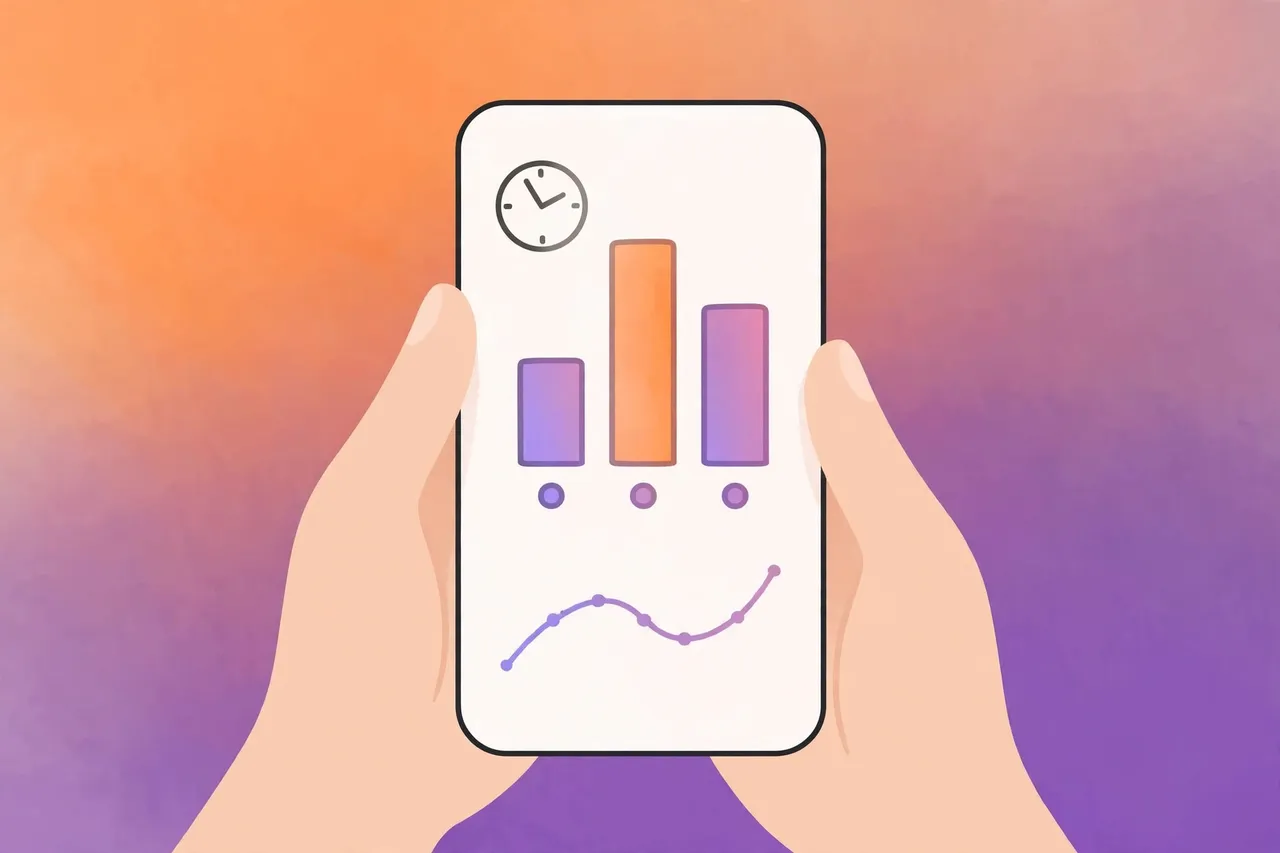
Generic charts are a starting point — your own data is the answer. Instagram Insights shows the days and hours your followers are most active, but only with a professional account (Creator or Business), which is free to switch to in Settings.
Here is how to check it:
- Go to your profile and tap Insights (or tap the menu, then Insights).
- Tap Total followers under the Audience section.
- Scroll down to Most active times.
- Look at the bar chart by day and by hour. The tallest bars are your peak times.
- Note the top two or three hours for each day of the week — those are your real posting windows.
Check this chart every few weeks — your audience changes as you grow, and the best time shifts with it. An account with followers across several countries may show two peaks, one per region.
Time zones: the detail most people miss
If your followers live in more than one country, posting “at 9 a.m.” means nothing until you know whose 9 a.m. it is. Insights shows activity in your local time zone, so a peak at 8 p.m. on your chart is 8 p.m. where you are — but their 3 p.m. if half your audience is five hours behind you.
When your audience is spread out, pick the time zone where most of your followers live and post for them. If the split is close, post in the window where the two regions overlap — often early evening for one region is late afternoon for the other.

Build a posting schedule that fits your week
Knowing the best time is only half the job — the other half is showing up consistently. A simple weekly schedule beats posting in bursts and then disappearing for a week.
- Pick three to five posting days and stick to them — for example Monday, Wednesday, and Friday.
- Fix one posting time per day based on your Insights peak, such as 10 a.m. on weekdays and 6 p.m. on Saturday.
- Prepare posts in advance. Write captions and edit photos or Reels in one batch session, then schedule them — Instagram’s own scheduler and Meta Business Suite both do this free.
- Post Stories on the days you skip feed posts too, so your profile stays active daily without the pressure of a daily feed post.
Consistency matters more than volume. Three good posts a week, every week, at the same time, will outperform seven posts one week and none the next. Your followers learn when to expect you, and the algorithm rewards accounts that publish steadily.
How to test your posting time in two weeks
Instead of trusting a chart, run a small two-week experiment. It costs nothing.
- Week one: post at your current usual time, or at 10 a.m. on weekdays. Record the likes, comments, shares, saves, and reach of each post after 24 hours.
- Week two: post similar content at your Insights peak hour, for example 7 p.m., and record the same numbers.
- Compare like with like. Compare Reels with Reels and photos with photos. Averages across three or four posts per week beat a single post.
- Keep the winner. If the evening posts clearly win, move your schedule there. If the difference is small, your audience may be online all day, and timing matters less for you than content quality.
- Repeat every few months. Audience habits change with seasons, school terms, and holidays.

Common timing mistakes to avoid
Posting when you are free, not when they are. Your own free hour may be your followers’ busy hour — check Insights first, then plan around the peak, or schedule the post in advance.
Posting several times in one hour. Publishing three posts at once splits your audience’s attention and makes each post compete with the others. Space posts at least a few hours apart, or save the extra content for another day.
Copying a competitor’s time blindly. A big account in your niche may post at noon because that is when their audience is online. Your audience may be different — different country, different age, different habits. Use their time as a test, not as a rule.
Chasing the perfect minute. The difference between 10:00 and 10:15 is tiny. The difference between posting at your audience’s peak and posting at 2 a.m. is huge. Get the hour right and stop worrying about the minute.
Frequently asked questions
What is the single best time to post on Instagram?
There is no single best time for every account. For most, weekday mornings from 9 to 11 a.m. and evenings from 7 to 9 p.m. are strong starting points. Your own best time is in Instagram Insights, under Total followers, then Most active times.
What is the best time to post Reels on Instagram?
Evenings between 7 and 9 p.m. are usually best for Reels, because viewers have time to watch with sound. Lunch hours and the morning commute can also work well. Post when your followers are online so the Reel gets early engagement.
What is the best day to post on Instagram?
Tuesday, Wednesday, and Thursday are the most reliable for most accounts. Weekends can be strong for entertainment, food, travel, and lifestyle content. Check your own Insights by day to be sure.
How often should I post on Instagram?
Three to five feed posts a week is a good target, plus Stories on most days. Consistency matters more than volume — a steady three posts a week beats seven one week and none the next.
Does posting time still matter if I use hashtags?
Yes, but they do different jobs. Hashtags help new people discover your post; timing helps your followers see it quickly and engage, which signals Instagram to show it to more people. Neither can save weak content.
Conclusion
The best time to post on Instagram is not a secret hour hidden in a chart — it is the hour your own followers are online. Start with the general patterns in this guide: weekday mornings and evenings, Tuesday to Thursday, and evenings for Reels. Then open Instagram Insights, find your real peak hours, and build a simple weekly schedule around them. Test your timing for two weeks, keep what works, and check again every few months. Good content, posted when your audience is watching, posted consistently — that is what grows an account.