

Finding the right business customers used to mean hours of manual research, cold lists, and guesswork. Today, AI tools for B2B prospecting can scan company data, spot buying signals, and build a ranked list of prospects in minutes. For small sales teams and solo founders, that change is enormous: instead of chasing every lead, you start with the ones most likely to buy.
Short answer: AI tools for B2B prospecting use artificial intelligence to find companies that match your ideal customer, enrich their contact details, score them by buying intent, and help you reach out with personalised messages. The best tools combine a large business database with CRM integration and outreach automation, so your team spends its time talking to qualified prospects instead of researching them.
What Are AI Tools for B2B Prospecting?
AI tools for B2B prospecting are software platforms that help businesses find and contact other businesses that could become customers. “B2B” means business-to-business: you are selling to companies, not to individual consumers. Prospecting is the first stage of selling — identifying potential customers before you ever speak to them.
Traditional prospecting relied on spreadsheets, trade directories, and manual LinkedIn searches. AI prospecting tools automate most of that work. They search large databases of companies, filter them by industry, size, location, and technology used, and then rank the results by how likely each company is to need your product. Some tools also find the right contact person inside each company and suggest the best way to reach them.
The key difference from a simple company list is intelligence. A good tool does not just hand you names. It explains why each prospect made the list — for example, the company recently hired a new manager, raised funding, or started using a tool that works alongside yours. Those signals turn a cold list into a warm starting point.
How AI Prospecting Tools Work
Most AI sales prospecting tools follow the same four-stage process, even though their interfaces look different. Understanding these stages helps you judge any tool fairly instead of being impressed by a demo.

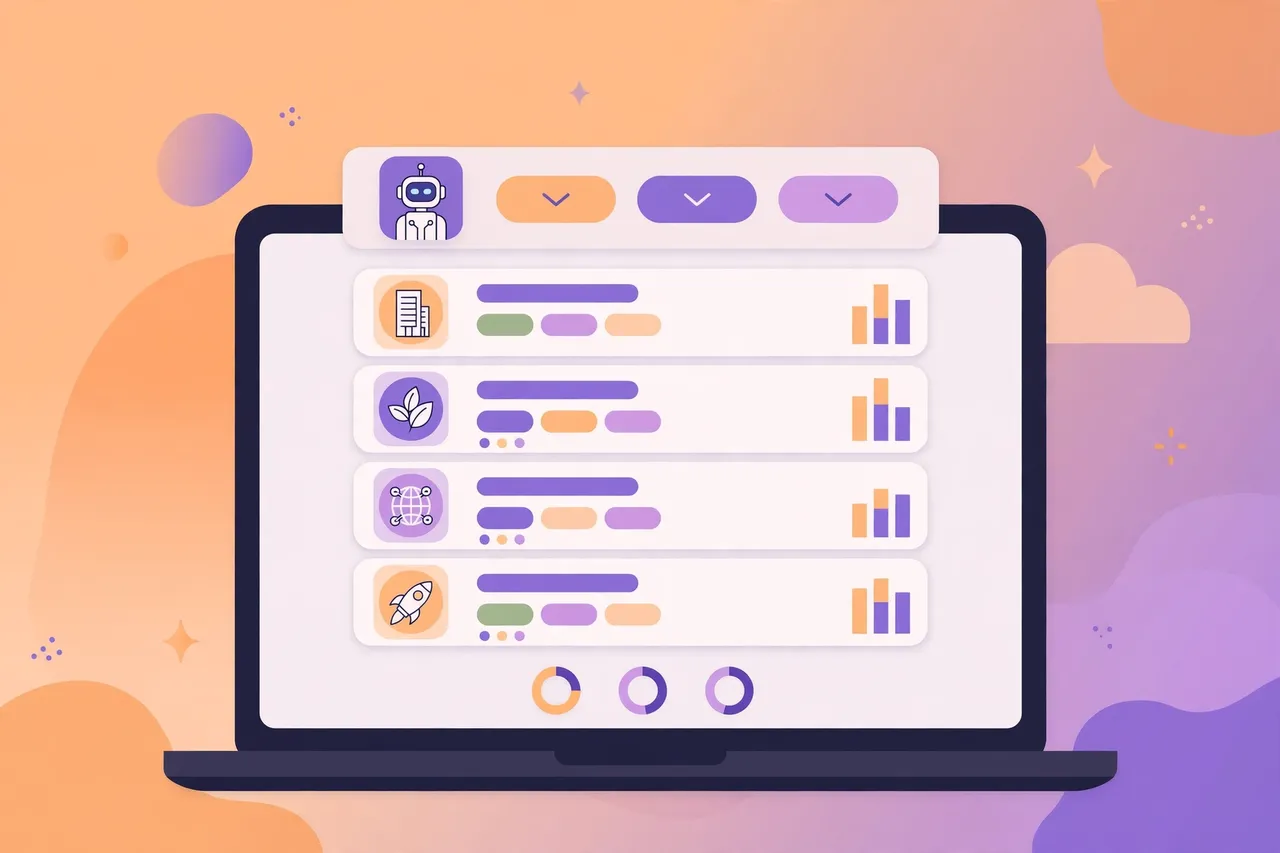
AI moves leads through the funnel by scoring and sorting them automatically.
1. Finding companies that fit
You start by describing your ideal customer: industry, company size, location, revenue range, or the software they already use. The tool searches its database and returns matching companies. The best databases cover millions of businesses, but size is not everything — accuracy and freshness matter more than a big number.
2. Enriching contact data
Once companies are found, the tool fills in the gaps: the right decision-maker, their job title, work email, and sometimes a phone number. This step is called data enrichment. Good enrichment saves hours, but no database is perfect, so expect a small share of outdated contacts and verify important ones before a big outreach campaign.
3. Scoring and prioritising
AI scoring ranks prospects by buying intent. Signals can include recent job postings, website technology changes, funding news, or engagement with your content. A prospect with several strong signals goes to the top of the list. This is where AI adds the most value: it tells a busy salesperson who to call first.
4. Helping with outreach
Many tools draft personalised emails or LinkedIn messages using the prospect’s company data. Used well, this speeds up outreach without making it sound robotic. Used badly, it produces generic spam. The rule is simple: let AI write the first draft, but always review and personalise the message before sending it.
What the Best AI Prospecting Tools Do
The best AI prospecting tools share a few qualities. Look for these when you compare options, rather than choosing by brand name alone.
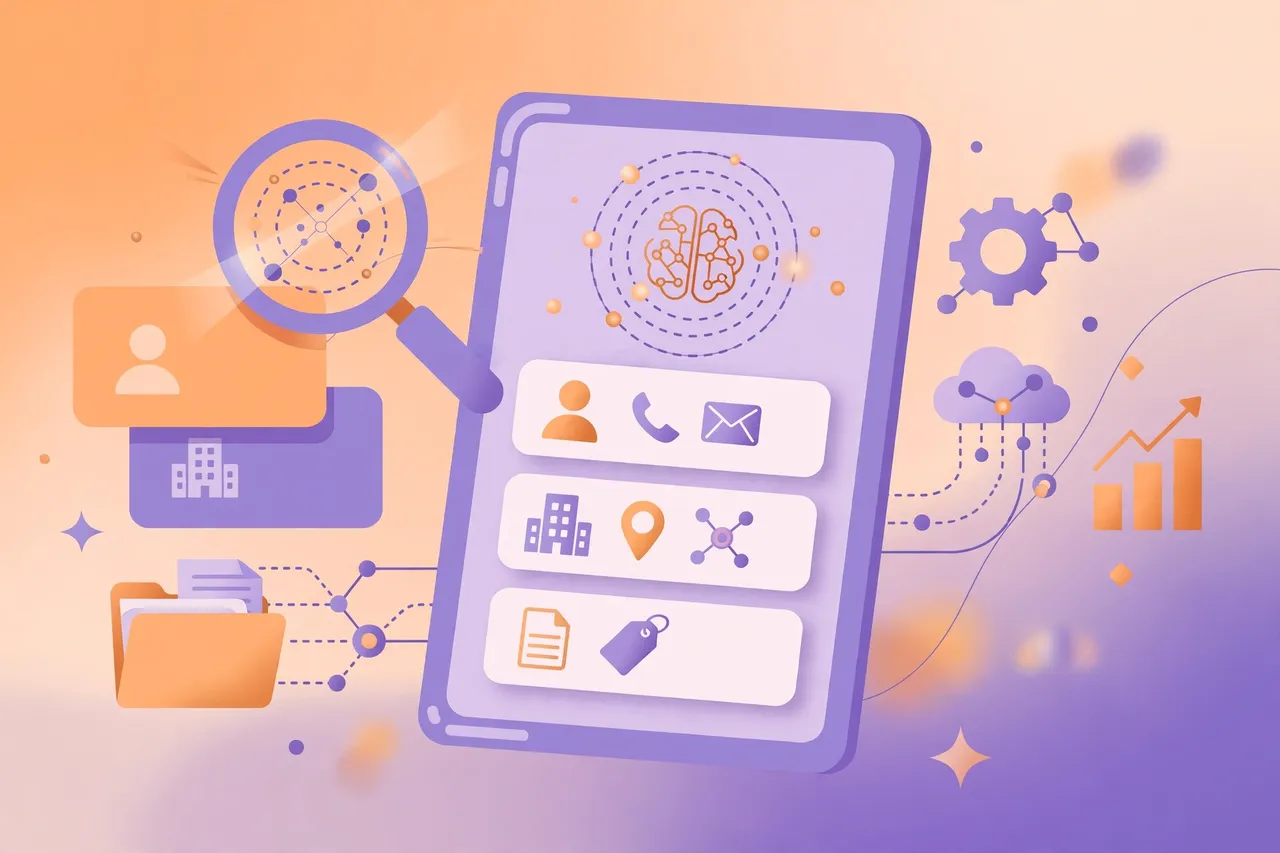
Data enrichment fills in missing company and contact details.
A large, accurate database
The tool should cover your target market well. If you sell to UK manufacturers, a database strong in US tech startups will not help you. Ask for a trial search in your exact niche before paying.
CRM integration
Prospect data is only useful if it reaches your sales system. Leading CRMs such as Salesforce and HubSpot offer AI features and integrations that push enriched prospects straight into your pipeline, so nothing is lost in a spreadsheet. If your team already uses a CRM, choose a prospecting tool that connects to it.
Intent and signal data
The strongest tools track buying signals: hiring patterns, funding rounds, new office openings, or technology changes. These signals are what separate an AI tool from a static list. A company that just hired five salespeople is far more likely to need sales software than one that has not changed in two years.
Built-in outreach and sequencing
Some platforms include email sequencing, so you can plan a series of follow-ups instead of sending one message and hoping. Others focus only on data and expect you to use a separate outreach tool. Either approach works — just be clear about which parts of the workflow the tool actually covers.
Compliance and data quality
Business contact data is regulated in many regions, including the UK and EU under GDPR. Reputable b2b prospecting software explains where its data comes from and offers opt-out handling. Avoid tools that cannot explain their data sources.
How to Use AI Tools for B2B Prospecting
Follow these steps to get real results instead of just a bigger contact list.

Personalised outreach works best when it is built on real prospect data.
- Define your ideal customer profile. Write down industry, company size, location, and the job title of your buyer. Be specific: “marketing managers at UK e-commerce companies with 20–200 staff” beats “any business.”
- Build a focused list. Use the tool’s filters to create a list of 100–200 companies that match the profile. A small, accurate list outperforms a list of 10,000 random names.
- Verify the top contacts. Check the decision-makers for your 20 most promising accounts. Correct a wrong job title or outdated email before you send anything.
- Research the top 10 accounts properly. Read their website, recent news, and job posts. Note one genuine observation per company to use in your message.
- Write personalised outreach. Let the AI draft the message, then edit it with your observation from step 4. Mention a real problem the company seems to have and how you can help.
- Follow up in a sequence. Most replies come after the second or third message, not the first. Plan three to five touches across email and LinkedIn over two to three weeks.
- Measure and refine. Track reply rates by segment. If one industry replies far more than another, shift your list toward the responsive segment and adjust your ideal customer profile.
Benefits and Limitations of AI Prospecting
The main benefit is speed. Work that took a salesperson a full day — building a list, finding contacts, and drafting messages — can now take an hour. AI tools for lead generation also improve consistency: every prospect gets scored the same way, so good leads are less likely to be missed because someone was busy.
There are real limits, though. Data goes out of date quickly as people change jobs, so even the best database contains errors. AI-written messages can sound generic if nobody edits them, and over-automation can damage your reputation if prospects feel spammed. AI also cannot replace the human judgement of whether a company is genuinely a good fit — it can only rank probabilities.
Think of these tools as research assistants, not replacements for salespeople. They find and sort; humans build trust and close deals. Teams that use AI this way usually see better results than teams that either ignore AI or hand the whole process to it.
If you are exploring AI beyond sales, our guides to AI tools for coding and AI tool directories show how the same technology is changing other parts of running a business — and if you are still shaping the business itself, these online business ideas can help you pick a niche worth prospecting in.
Frequently Asked Questions
What are AI tools for B2B prospecting?
They are software platforms that use artificial intelligence to find companies matching your ideal customer, enrich their contact details, score them by buying intent, and help you contact them with personalised messages.
Are AI prospecting tools accurate?
Mostly, but not perfectly. Contact data changes as people switch jobs, so expect some outdated records. The best tools refresh their databases regularly and show a confidence level or last-verified date for each contact.
Can AI tools replace a salesperson?
No. AI is strong at finding, sorting, and drafting, but it cannot build trust, handle objections, or close a complex B2B deal. The best results come from AI research combined with human outreach.
How much do AI prospecting tools cost?
Pricing varies widely, from free trials and starter plans to enterprise contracts, and it changes often. Compare tools on database coverage for your niche, CRM integration, and data accuracy rather than on price alone, and always test with a trial first.
Is AI prospecting legal under GDPR?
It can be, if done properly. Business contact data must come from lawful sources, and recipients must be able to opt out. Choose tools that explain their data sources and follow the rules for business-to-business outreach in your region.
Conclusion
AI tools for B2B prospecting will not magically fill your pipeline, but they will make prospecting faster, more focused, and far less tedious. Start with a clear ideal customer profile, pick a tool that covers your niche and connects to your CRM, and keep a human in charge of the message. Do that, and AI becomes what it should be: a research assistant that helps your team spend its time on the prospects most likely to become customers.