
Cut through the noise. This guide breaks down the best instructional technology services, tools, and LMS platforms actually worth your budget in 2026.
Your School Bought 12 EdTech Tools. Why Are Students Still Struggling?
Here’s a scene playing out in institutions everywhere right now: a department head sits in front of three different dashboards, none of which talk to each other, trying to figure out why engagement dropped 30% after a “digital transformation” initiative that cost six figures.
Sound familiar? The problem isn’t a lack of technology. It’s a lack of strategic instructional technology services the kind that connects the right tools to the right learning outcomes, with a clear implementation plan behind them.
This guide is for instructional designers, department heads, IT coordinators, and independent educators who want to stop collecting tools and start building systems. By the end, you’ll know which services are worth investing in, how to evaluate them, and how to implement them without burning out your team.
What “Instructional Technology Services” Actually Means (And What It Doesn’t)
Let’s be precise. Instructional technology services is not a product category it’s a discipline. It refers to the full ecosystem of:
- Platforms (LMS, authoring tools, video platforms)
- Processes (curriculum design, content delivery frameworks)
- Support (faculty training, technical helpdesk, accessibility auditing)
- Analytics (learning data, engagement tracking, outcome measurement)
The common mistake institutions make is treating it as a software purchase. The software is the smallest part. The services implementation, training, ongoing support, and integration are where the real value (and real cost) lives.
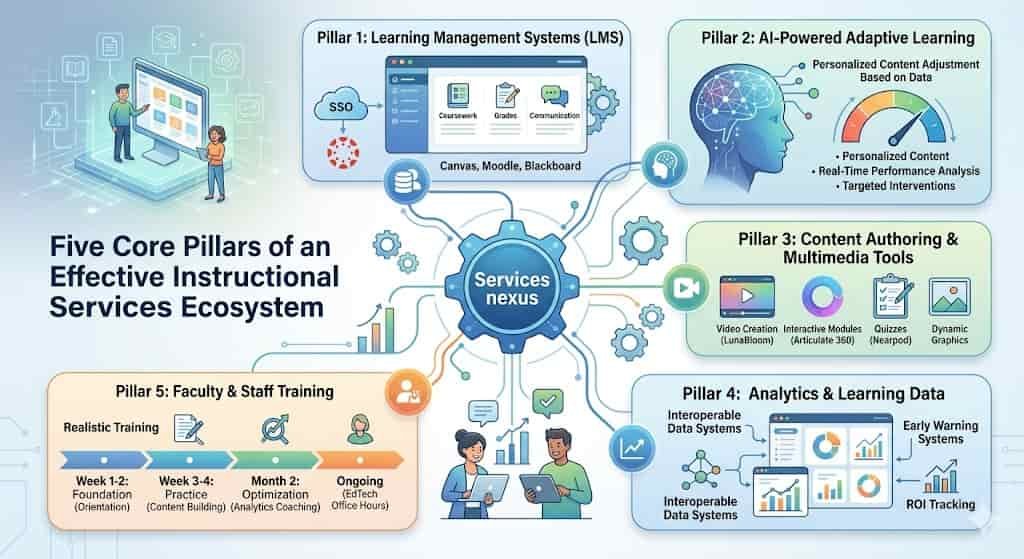
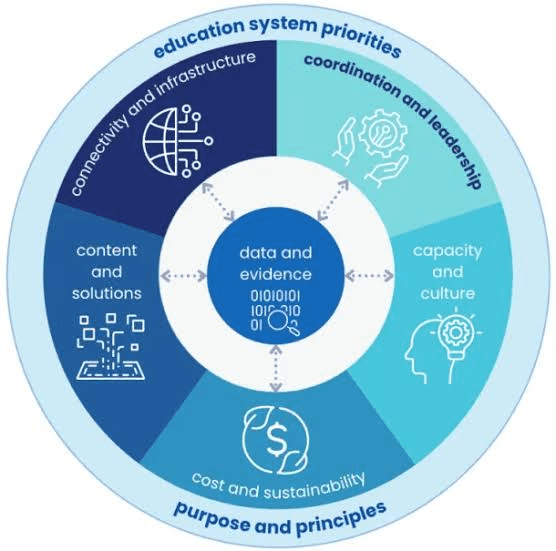
The 5 Core Pillars of Instructional Technology Services
Pillar 1: Learning Management Systems (LMS)
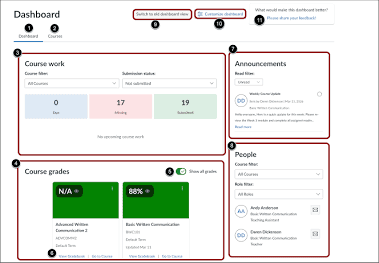
The LMS is the spine of every digital learning operation. By 2026, the global LMS market is projected to reach $29.9 billion, growing at 19.1% annually a clear signal that institutions are doubling down, not pulling back.
But not all LMS platforms are built for the same context. Here’s what to look for:
- SCORM/AICC compliance non-negotiable for content portability
- SSO integration single sign-on reduces friction for learners
- Mobile-first design most learners access on phones
- Built-in analytics if you can’t measure it, you can’t improve it
- AI-powered content tools generative AI for lesson creation is now table stakes
Top platforms in 2026: Canvas, Blackboard (by Anthology), Moodle, 360Learning, Paradiso LMS, iSpring, GoSkills
2: AI-Powered Adaptive Learning
This is where instructional technology services have made the biggest leap in the past two years.
What adaptive learning actually does:
- A learner completes an initial assessment or starts a module
- The AI platform analyzes performance data in real time
- The system adjusts the difficulty, sequence, and format of content
- Learners who struggle get targeted micro-interventions; advanced learners get acceleration
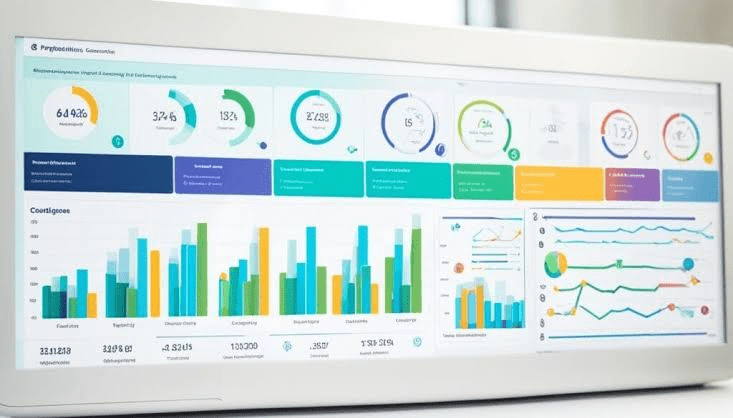
- Educators receive dashboards showing exactly where each student is stuck
According to research tracked through early 2026, 69% of teachers report that AI tools have improved their teaching methods, while 55% say AI has given them more direct time with students not less. That’s the key distinction: AI as an amplifier, not a replacement.
The AI in education market was valued at $4 billion in 2022 and is projected to grow at a CAGR exceeding 10% through 2032. The window to build competency before this becomes mandatory is closing.
Step-by-step: How to evaluate an adaptive learning platform
- Ask the vendor for a demo with your content (not their sample course)
- Test the analytics dashboard yourself can you find a struggling learner in under 60 seconds?
- Request data on actual outcome improvements from comparable institutions
- Confirm the platform integrates with your existing LMS via API or LTI
- Check if AI-generated content can be reviewed and edited by instructors before it reaches learners
3: Content Authoring & Multimedia Tools
A great LMS with poor content is still a poor learning experience. Instructional technology services must include a content creation layer and in 2026, that layer is increasingly AI-assisted.
The current tool stack that actually works:
- Articulate 360 industry standard for building polished, self-paced interactive modules
- Nearpod live lesson delivery with embedded quizzes and interactive activities
- Edpuzzle video-based lessons with embedded comprehension checks
- Kahoot! gamified assessments that work best as engagement boosters, not standalone tools
- LunaBloom AI multilingual AI video creation for schools with diverse or multilingual learner populations
A critical note: Tools like Nearpod and Kahoot improve lesson delivery and participation, but they work best when integrated into a wider instructional plan not deployed as disconnected apps. This is where institutional instructional technology services (the human layer) matter as much as the software.
4: Analytics & Learning Data
You cannot improve what you cannot measure. Yet most institutions collect data and do almost nothing with it.
What good learning analytics looks like in practice:
- Early warning systems flagging at-risk students based on login frequency, assessment scores, and engagement patterns before they disengage
- Cohort comparisons which sections of a course are underperforming, and why?
- Content performance which modules have the highest drop-off rates?
- ROI tracking can you connect learning activity to actual outcomes (completion rates, certification, job placement)?
The shift in 2026 is toward interoperable data systems institutions are finally demanding that their LMS, HR systems, student information systems, and assessment tools share data without custom API work for every connection. Look for platforms that support 1EdTech standards (formerly IMS Global) if data portability matters to you.
5: Faculty & Staff Training (The Most Underbudgeted Service)
Here’s an uncomfortable truth: most EdTech implementations fail not because the technology is bad, but because faculty don’t know how to use it effectively.
A realistic training framework:
Week 1–2 (Foundation)
- Platform orientation: navigation, course setup, assignment creation
- Focus on what faculty will use in the first 30 days nothing else
Week 3–4 (Practice)
- Hands-on content building in the actual platform
- Peer observation: instructors share early drafts of digital courses for feedback
Month 2 (Optimization)
- Analytics training: how to read dashboards and act on data
- One-on-one coaching for faculty with specific challenges
Ongoing (Sustainment)
- Monthly “EdTech office hours” not mandatory, not a webinar, but a live drop-in
- A shared repository of internal best practices, updated by faculty, for faculty
Comparison Table: Instructional Technology Platforms in 2026
| Platform | Best For | Cost Range | Ease of Use | AI Features | LMS Integration |
|---|---|---|---|---|---|
| Canvas | K-12 & Higher Ed | $$ | ★★★★☆ | Moderate | Excellent |
| Blackboard (Anthology) | Large Universities | $$$ | ★★★☆☆ | Growing | Excellent |
| Moodle | Budget-conscious Institutions | Free/$$ | ★★★☆☆ | Limited | Good |
| 360Learning | Corporate L&D | $$$$ | ★★★★★ | Strong | Good |
| Articulate 360 | Content Authoring | $$$ | ★★★★☆ | Growing | Via SCORM |
| iSpring | Corporate Training | $$ | ★★★★☆ | Moderate | Via SCORM |
| Paradiso LMS | SMBs & Education | $$ | ★★★★☆ | Strong | Excellent |
Cost Key: $ = Under $5K/year | $$ = $5K–$20K | $$$ = $20K–$60K | $$$$ = $60K+
⚠️ Common Mistakes to Avoid
Mistake #1: Buying the tool before defining the outcome No LMS in the world will fix vague learning objectives. Before any purchase, your team should be able to answer: “What specific behavior change do we want from learners, and how will we measure it?”
Mistake #2: Letting vendors run your implementation Vendors have an incentive to show you every feature immediately. That guarantees overwhelm and abandonment. Appoint an internal instructional technology lead who controls the rollout timeline.
Mistake #3: Ignoring accessibility from the start Retrofitting ADA/WCAG compliance into existing digital courses is 3–5x more expensive than building it in from day one. Require accessibility audits as a contract condition with any EdTech vendor.
Mistake #4: Skipping the pilot phase Rolling out a new LMS to 5,000 students before testing it with 50 is how institutions create crises. Always run a structured 6–8 week pilot with a representative cohort before full deployment.
Pro Tip: The most cost-effective instructional technology investment most institutions can make right now is not a new tool it’s a dedicated instructional designer (full-time or contracted) who bridges the gap between faculty subject expertise and digital learning design.
Pro Tip: When evaluating AI adaptive learning platforms, ask specifically for outcome data from comparable institutions not aggregate platform statistics. The question is not “does this AI work?” but “does it work for learners like mine?”
How to Build an Instructional Technology Services Strategy (Step-by-Step)
This is the implementation roadmap for institutions starting from scratch or rebuilding after a failed rollout.
Phase 1: Audit (Weeks 1–3)
- Inventory every EdTech tool currently licensed (you’ll find 30–40% are unused)
- Survey faculty: what’s working, what’s abandoned, what’s genuinely needed
- Map your current content formats (video, PDF, live, hybrid) and identify gaps
Phase 2: Define (Weeks 4–6)
- Set 3 specific, measurable learning outcomes the technology must support
- Identify your highest-priority learner segment (first-year students? Remote workers? Adult learners?)
- Define your budget ceiling before talking to any vendor
Phase 3: Select (Weeks 7–10)
- Issue an RFP or conduct structured demos for 3–4 platforms maximum
- Use the comparison table above as your evaluation matrix
- Require a pilot proposal as part of any vendor response
Phase 4: Pilot (Weeks 11–18)
- Deploy with one department, one course, one cohort
- Collect both quantitative data (completion, scores, time-on-task) and qualitative feedback (weekly surveys)
- Document what broke and what worked this becomes your implementation playbook
Phase 5: Scale (Month 5+)
- Roll out in waves, not all at once
- Train the next cohort of faculty using faculty who succeeded in the pilot peer credibility beats vendor-led training every time
- Set a 90-day check-in cadence with your analytics dashboard
FAQ: What People Actually Ask About Instructional Technology Services
Q1: What is the difference between instructional technology and educational technology?
The terms are often used interchangeably, but there’s a practical distinction. Educational technology is the broader category any technology used in learning contexts. Instructional technology specifically focuses on the design and delivery of instruction how content is structured, sequenced, and assessed to achieve defined learning outcomes. Instructional technology services typically include the human expertise layer: instructional designers, learning experience consultants, and technical support teams.
Q2: What is the average cost of instructional technology services for a mid-sized institution?
This varies significantly by scope. A basic LMS + faculty training package for a mid-sized school (500–2,000 learners) typically runs $15,000–$60,000 per year. Full-service implementation including content migration, custom development, and ongoing support from a managed services provider can reach $150,000–$400,000 annually. The most cost-effective approach is usually a hybrid: licensed software plus a contracted instructional designer (typically $75–$120/hour for experienced freelancers).
Q3: How do you measure the ROI of instructional technology services?
Focus on four metrics: completion rates (are learners finishing what they start?), assessment performance (are scores improving over baseline?), time-to-competency (are learners reaching proficiency faster?), and instructor time savings (how many hours per week are faculty reclaiming from administrative tasks?). Institutions that track these four metrics from implementation can typically demonstrate measurable ROI within 12–18 months.
Q4: What instructional technology services are most important for remote or hybrid learning?
For fully remote or hybrid contexts, prioritize in this order: (1) a reliable, mobile-friendly LMS with asynchronous content support; (2) a video platform with closed captioning and engagement analytics; (3) a synchronous collaboration tool (Zoom, Teams, or equivalent) with LMS integration; (4) an adaptive assessment engine to replace proctored in-person testing. The biggest gap most hybrid programs have is not the platform it’s asynchronous content quality. Short, well-structured video modules consistently outperform long recorded lectures.
Q5: How long does a full LMS implementation take?
For a straightforward deployment with existing content: 3–6 months from contract signing to full faculty use. For a complex migration from a legacy system with custom integrations, 9–18 months is realistic. The most common cause of delays is underestimating content migration, converting existing PDFs, Word docs, and PowerPoints into proper digital learning objects takes significantly longer than most teams anticipate. Budget 40% of your timeline for content work alone.
Conclusion: Stop Buying Tools. Start Building Systems.
The institutions and organizations winning with instructional technology in 2026 aren’t the ones with the most tools. They’re the ones with clear outcomes, strategic implementation, and the human expertise to connect technology to learning.
The global LMS market is approaching $30 billion. AI is embedded in every major platform. Adaptive learning is no longer experimental, it’s expected. The question is no longer whether to invest in instructional technology services, but how to do it without wasting half your budget on platforms nobody uses.