
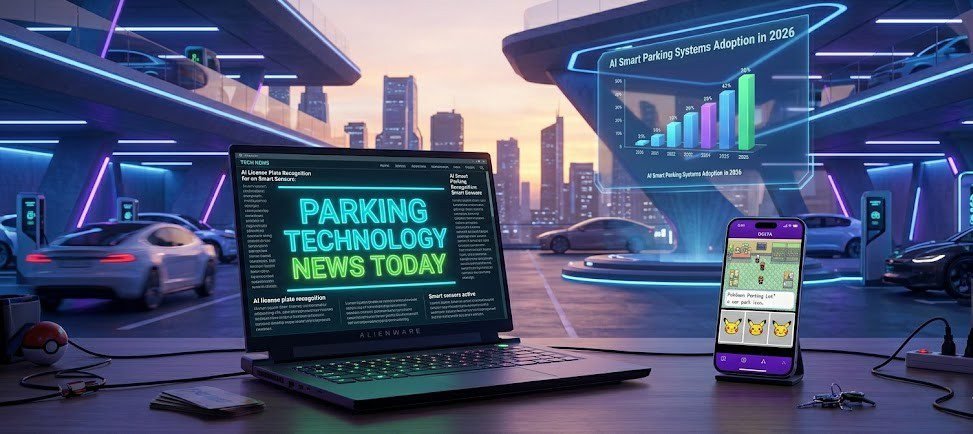
Stay ahead with the latest parking technology news today. From AI license plate recognition to IoT sensors — here's what's actually changing in 2026.
The Problem Nobody Talks About (But Every Driver Feels)
You’ve circled the same block three times. Your GPS says “parking nearby,” but every lot is full. You’re 10 minutes late, burning fuel, and watching your blood pressure rise — all because parking infrastructure hasn’t kept up with the 21st century.
Here’s the reality: urban parking inefficiency costs cities billions annually in lost revenue, increased emissions, and traffic congestion. But in 2026, that story is finally starting to change.
This guide covers the most important parking technology news today — from AI-powered license plate recognition to IoT sensor networks and MIT’s game-changing navigation research. By the end, you’ll know exactly what’s coming, which systems are already live, and how cities (and businesses) can deploy smart parking tech without burning a hole in their budget.
What’s Actually Happening in Parking Tech Right Now (2026 Update)
1. AI + IoT: The Dual Framework That’s Taking Over
The biggest shift in parking technology today isn’t one innovation — it’s the combination of two: Artificial Intelligence and the Internet of Things.
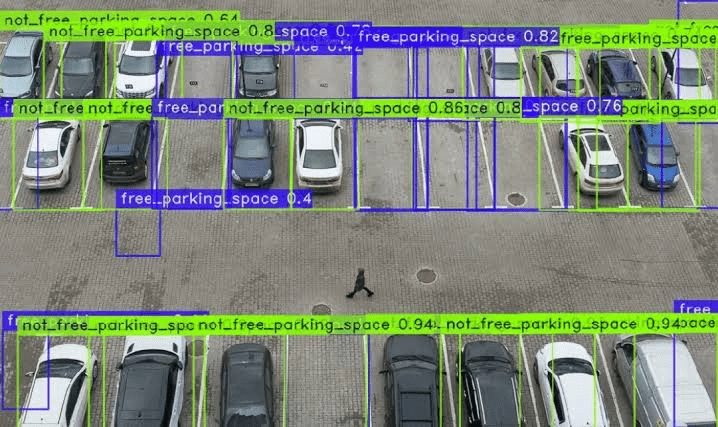
Recent IEEE research introduced a dual AI-IoT framework for intelligent parking systems that combines automated license plate detection with dynamic pricing tools. The system uses YOLOv12 (a cutting-edge object detection algorithm) alongside TesseractOCR to identify vehicles in real time and adjust parking prices based on:
- Time of day and duration
- Weather conditions
- Vehicle type
- Demand for the specific slot
This isn’t theoretical. It’s live research with real-world implications for how parking lots charge customers — and it’s already being piloted in smart cities globally.
Why it matters for operators: Dynamic pricing means no more flat-rate revenue caps. A downtown garage near a stadium can automatically charge premium rates on game nights — without a single human making that call.
2. Automated License Plate Recognition (ALPR) Goes Mainstream
ALPR is no longer just for border control or law enforcement. In 2026, it’s the backbone of modern parking management.
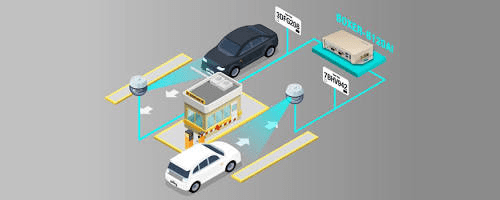
How it works (step by step):
- A camera captures an image of the vehicle’s license plate at entry
- Computer vision + OCR algorithms extract the plate number
- The plate is checked against a central database (registered vehicles, payment history, permits)
- Gate opens automatically — zero human interaction required
- On exit, duration is calculated, payment is processed, and the gate opens
According to research published in Scientific Reports, IoT-integrated ALPR systems achieve:
| Condition | Recognition Accuracy |
|---|---|
| Daylight | 95% |
| Low Light | 90% |
| 45° Angle | 93% |
| Distance (1.5–3m) | 88% |
That’s near-human-level performance, at a fraction of the cost of staffed entry points.
Urbiotica, a European smart city tech company, officially launched its LPR solution at Intertraffic Amsterdam 2026 — combining license plate recognition, IoT sensors, and advanced software into a single end-to-end platform for both on-street and off-street parking.
3. MIT’s Parking-Aware Navigation: 66% Time Savings in Congested Cities
Here’s the research that should be on every city planner’s radar.
MIT engineers published findings in February 2026 on a parking-aware navigation system that directs drivers not to their destination, but to the optimal parking area that balances:
- Proximity to the destination
- Likelihood of available spaces
- Real-time traffic flow
In simulated tests using actual Seattle traffic data, the system achieved up to 66% time savings in the most congested scenarios. Drivers saved as much as 35 minutes per trip — and got accurate total travel time estimates instead of false promises.
The implications are massive: less circling = less fuel burn = fewer emissions. For cities trying to hit sustainability targets, this is a direct lever.
4. Cloud-Based Parking Management: Real-Time Data at Scale
Traditional parking management runs on siloed, on-premise systems. The 2026 shift is toward cloud-first architectures that enable:
- Real-time space availability tracking
- Remote monitoring across multiple facilities
- Automated billing and pricing updates
- Integration with city-wide mobility apps
The parking management market is explicitly moving toward cloud-based and hybrid solutions for real-time data analysis — and operators who don’t make this shift risk being left behind as cities mandate interoperable systems.
Key players driving this: Aisin Corporation, ParkHelp Technologies, Skidata GmbH, and Flash (which recently appointed Peter Weiss as Chief Business Officer to lead their real estate and parking portfolio expansion).
5. Mobile Payments: The 75% Tipping Point
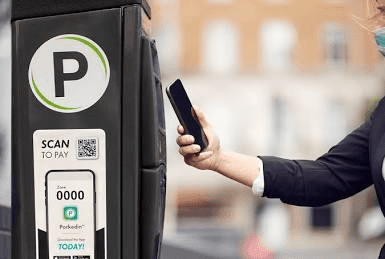
Urban mobility data from 2026 reveals a crucial benchmark: cities that invest in enforcement software are pushing mobile payment adoption past 75% of all parking transactions.
What’s enabling this?
- Mobile apps replacing physical meters
- Integration of parking payments into navigation apps
- Open-market models replacing city-monopoly tender systems (giving users an actual choice of payment provider)
JustPark, for instance, just expanded its event parking technology partnership with American Airlines Center, home of the Dallas Mavericks and Stars. That’s not a startup play; that’s enterprise-level infrastructure replacing manual parking management at major venues.
Comparison Table: Smart Parking Technologies in 2026
| Technology | Cost Level | Ease of Deployment | Key Benefit | Best For |
|---|---|---|---|---|
| ALPR + IoT | Medium-High | Moderate | Contactless entry/exit | Large garages, airports |
| AI Dynamic Pricing | Medium | Low-Moderate | Revenue optimization | High-demand urban lots |
| Cloud PMS | Low-Medium | Easy | Remote management | Multi-location operators |
| Parking-Aware Navigation | Low (software) | Easy (API integration) | Reduces search time | City-scale deployment |
| Mobile Payment Apps | Low | Very Easy | User convenience | Any parking facility |
| LoRaWAN IoT Sensors | Low | Moderate | Low-power, wide-area | Remote or large areas |
⚠️ Common Mistakes to Avoid (And Pro Tips)
Mistake #1: Deploying ALPR without low-light optimization Most parking facilities see 40%+ of usage in early mornings and evenings. An ALPR system that performs at 60% accuracy in low light is functionally useless. Always test night-time performance before signing any vendor contract.
Mistake #2: Treating IoT sensors as “set and forget” Sensors drift, batteries die, and firmware goes stale. Build a quarterly maintenance cycle into your operational budget from day one. The $10,000 you save skipping this will cost $50,000 in data errors within 18 months.
Mistake #3: Skipping the mobile UX layer You can have the most sophisticated backend infrastructure in the world — and users will still hate your parking system if the app is clunky. Invest in the customer-facing interface as seriously as the sensors.
Pro Tip: Combine LoRaWAN sensors with cloud-based management for budget-constrained city governments. LoRaWAN operates on unlicensed spectrum, runs on solar, and can cover large areas without expensive cellular data plans. Several research systems have proven this architecture viable at scale.
Pro Tip: Before buying any “smart parking platform,” ask the vendor specifically: Does your system support open APIs? Cities are moving toward open-market, interoperable ecosystems. A proprietary, locked-in system will be a liability in 3 years.
How to Actually Implement Smart Parking (Step-by-Step for Operators)
This isn’t just “install sensors and call it done.” Here’s a realistic implementation roadmap:
Phase 1: Assessment (Weeks 1–2)
- Map every entry/exit point and parking zone
- Document current average occupancy rates (hourly)
- Identify your #1 pain point: revenue leakage? Congestion? Manual staffing costs?
Phase 2: Pilot Deployment (Weeks 3–8)
- Install IoT occupancy sensors in one zone (20–30 spaces)
- Connect to a cloud dashboard for real-time monitoring
- Set up a basic ALPR camera at one entry gate
- Don’t touch pricing yet — just collect baseline data
Phase 3: Data-Driven Optimization (Weeks 9–16)
- Analyze occupancy patterns by time of day, day of week
- Activate dynamic pricing based on demand curves
- Integrate with one mobile payment app (test user adoption)
Phase 4: Scale (Month 4 onward)
- Expand ALPR to all entry/exit points
- Launch the parking app or integrate with existing city mobility apps
- Connect to navigation platforms (HERE, Google Maps, Waze) via API
🔗 [Internal Link Placeholder: Link to your article on “IoT Sensor Vendors Compared 2026”]
FAQ: What People Actually Ask About Parking Technology
Q1: What is the most accurate parking technology for license plate recognition in 2026?
Systems using YOLOv12 + TesseractOCR combined with infrared sensors currently lead the field. Real-world testing shows up to 95% accuracy in daylight and 90% in low-light conditions. The dual-verification approach (camera + IR sensor) reduces false positives significantly compared to camera-only systems.
Q2: How much does a smart parking system cost to deploy?
It varies significantly by scale. A basic IoT sensor + cloud dashboard setup for a 50-space lot can start around $15,000–$25,000. A full ALPR + dynamic pricing + mobile app integration for a multi-level garage typically runs $150,000–$500,000+. LoRaWAN-based systems offer the best cost-to-coverage ratio for budget-limited operators.
Q3: Is AI dynamic pricing legal for parking operators?
In most jurisdictions, yes — parking is treated as a private service where operators set their own rates. However, some cities have rate-capping ordinances for street parking or event venues. Always check local regulations before deploying surge pricing models, especially for publicly-owned facilities.
Q4: How does parking-aware navigation differ from regular GPS navigation?
Standard GPS takes you to your destination and assumes you’ll find parking. Parking-aware navigation (like MIT’s 2026 research system) routes you to the optimal parking area based on real-time occupancy data and the likelihood of finding a space — then guides you the final distance on foot. This approach cut trip time by up to 66% in congested test scenarios.
Q5: What’s the best parking technology for small cities or towns with limited budgets?
LoRaWAN-based IoT sensors paired with open-source parking management software are the most cost-effective entry point. These systems run on solar power, don’t require cellular data contracts, and can be monitored remotely. Several smaller municipalities have deployed full networks for under $50,000.
What’s Coming Next: The 2026–2028 Horizon
A few trends worth watching closely:
- EV Charging Integration: ParkMobile is launching an e-mobility EV charging service in North America, powered by Parkopedia. Parking facilities that don’t offer EV charging will increasingly struggle to attract users.
- AI-Driven Compliance Monitoring: Companies like Parking Revenue Recovery Services (PRRS) are deploying AI specifically for parking compliance and vehicle activity monitoring, a niche that’s growing fast as enforcement gets automated.
- Mobility Hubs: The long-term vision isn’t “better parking” — it’s replacing parking garages with multi-modal mobility hubs that integrate bikes, EVs, rideshare, and transit. Cities designing facilities today need to plan for this transition.
Conclusion: The Parking Industry Is Finally Catching Up
For decades, parking was the most analog part of urban infrastructure. In 2026, that’s no longer true.
AI, IoT, computer vision, and cloud platforms are converging to make parking faster, cheaper to operate, and less of a daily frustration for drivers. The technology is proven. The cost curves are dropping. The only question is whether your city, your business, or your operation is moving fast enough to adopt it.