

Smart Parking Technology in 2026: A Practical Guide for Drivers and Operators
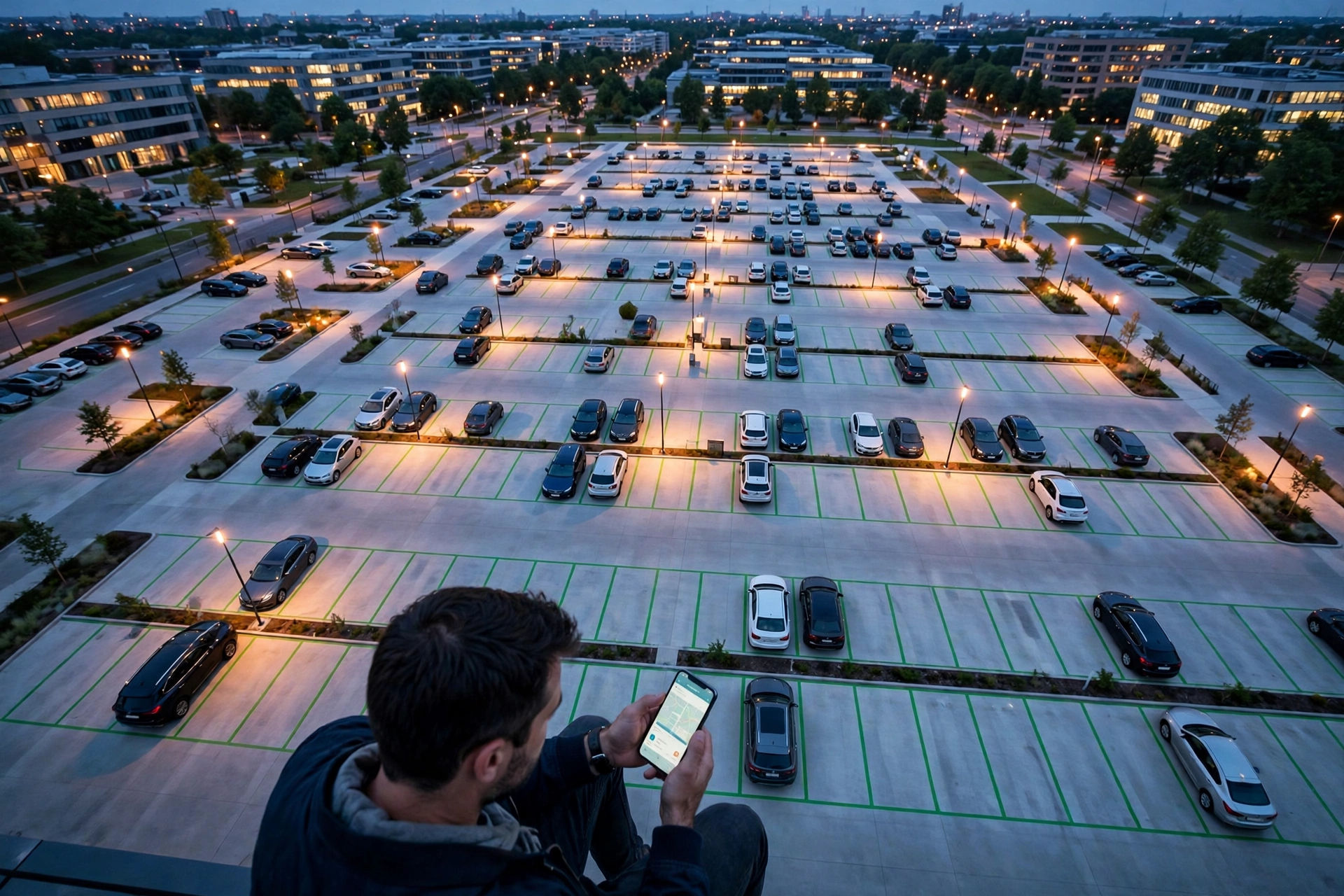
Circling a busy car park looking for a space is one of the most ordinary frustrations of driving. It burns fuel, adds to congestion, and turns a five-minute errand into a twenty-minute chore. Smart parking technology exists to fix exactly that: sensors, cameras, apps and payments that work together to show drivers where spaces are and let them pay without queuing.
This guide explains how smart parking technology works in 2026, what is genuinely useful, and what drivers and car park operators should look for — without the hype. The old version of this article carried specific percentage claims and study figures that could not be verified; this rewrite sticks to how the technology works and what it can realistically do.
How smart parking actually works: the four building blocks
Most smart parking systems combine four elements. Understanding each one makes it much easier to judge whether a particular car park — or a product an operator is considering — is genuinely smart or just has a new app.

1. Sensors that detect free and occupied spaces
The foundation is knowing, bay by bay, whether a space is free. The most common approach is a small sensor embedded in the ground in each bay, which detects a vehicle and reports the bay’s status to a central system. Overhead cameras can do the same job for open-air car parks, covering several bays from one camera. Ground sensors are accurate bay by bay but need installing in every space; cameras cover more area but can struggle in poor light or heavy rain.
Many car parks combine both, or simply count vehicles in and out at the entrances as a cheaper alternative.
2. Apps and digital signs that guide drivers
Sensor data is only useful if drivers can see it. That happens in two ways: signs at the car park entrance showing how many spaces are free on each level, and apps or maps that show availability before arrival. Many navigation and map apps now include parking information, and dedicated parking apps can also let drivers compare nearby car parks and, in some cases, reserve a space in advance.
The practical test is simple: does the app show live availability for the car park you actually need, and is it accurate when you arrive?
3. Number-plate recognition and barrier-free parking
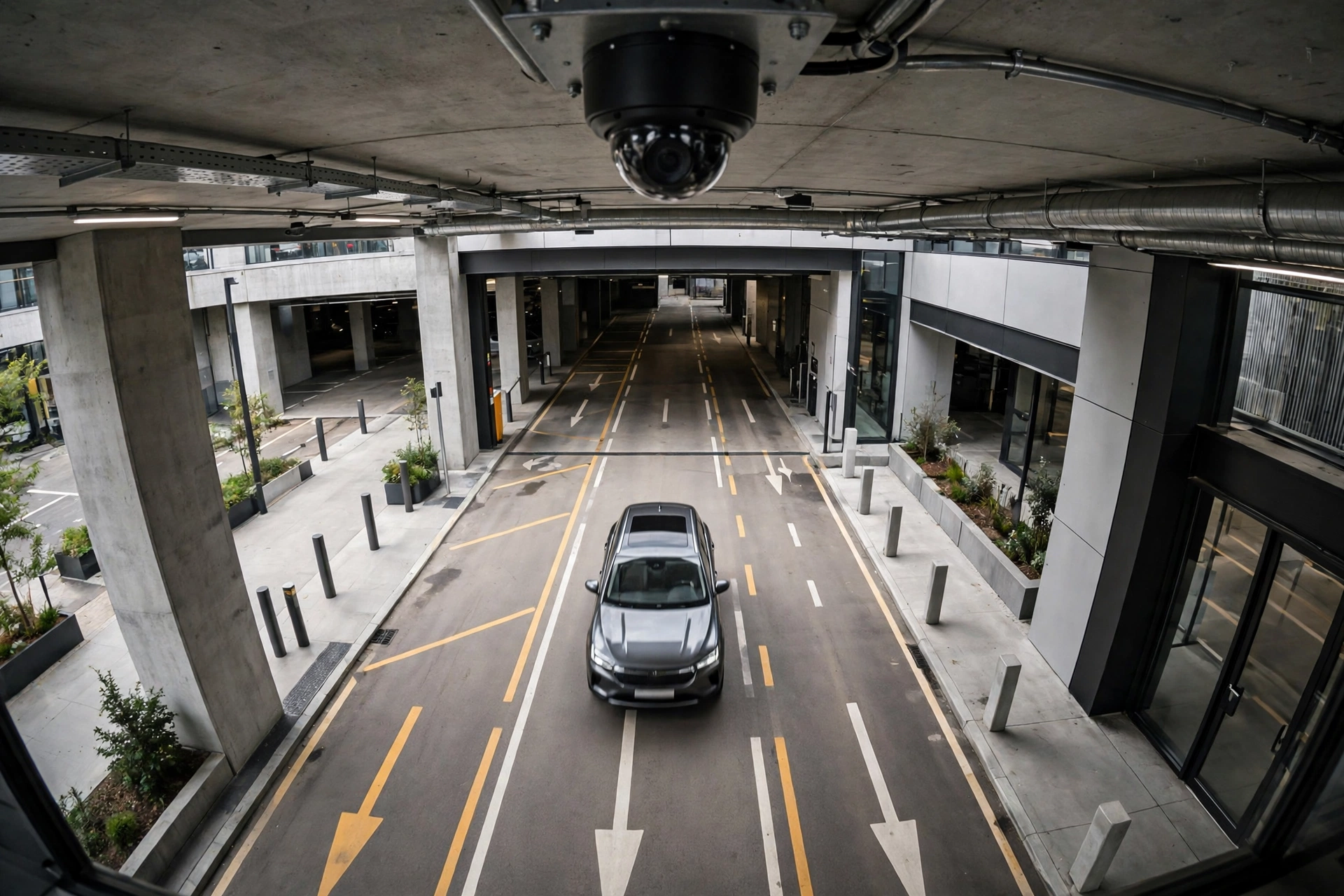
Automatic number-plate recognition (ANPR) uses cameras to read a vehicle’s registration plate on entry and exit. It replaces tickets and barriers in many modern car parks: the camera records when you arrived, the system works out the charge, and you pay by app, online, or at a machine using your plate number. Some systems link a plate to a payment method so regular users can drive in and out without stopping at all.
Barrier-free parking is convenient, but it depends on the cameras reading plates reliably and on drivers understanding how to pay. Clear signage at the entrance matters more than the technology itself: drivers need to know whether they must pay before leaving, within a set time afterwards, or whether payment is automatic.
4. Contactless and app-based payments
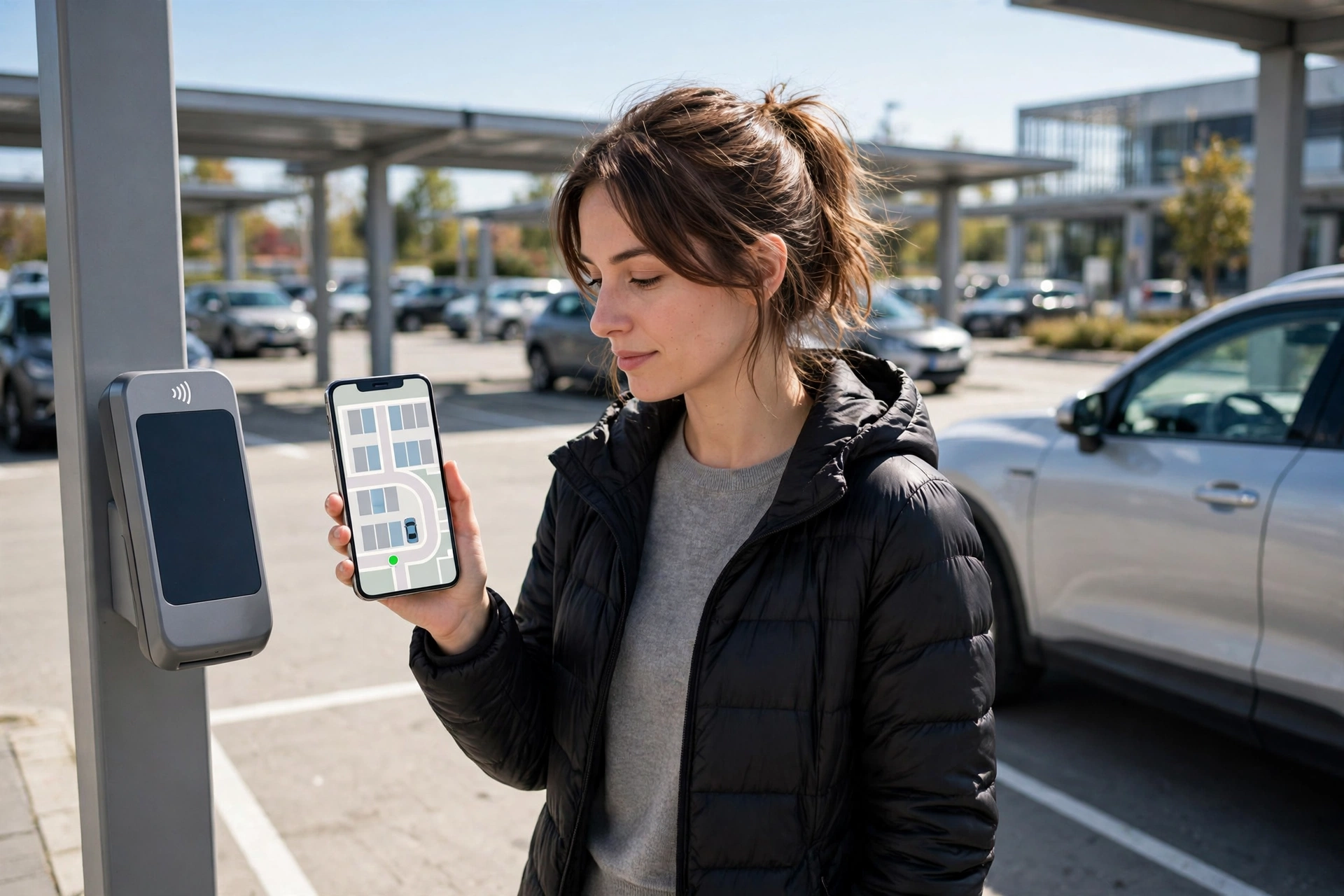
Paying for parking has moved steadily away from coins and paper tickets toward contactless cards, phone payments and in-app payment. The advantage for drivers is obvious: no hunting for change, no queuing at a machine, and the ability to extend a stay from the phone instead of walking back to the car. For operators, digital payments mean fewer machines to maintain and less cash handling. The trade-off is that some drivers still need a simple alternative, so a good system keeps at least one straightforward way to pay that does not require downloading an app.
What drivers should look for in 2026
If you drive regularly, a little preparation makes smart parking work for you. Check live availability before you leave and have a second car park in mind if the first is full. Save the car parks you use often in your parking app, along with your payment details, so there is no setup step on every visit. Learn the payment rules before you park — whether payment is by plate number, by bay number, or automatic — and keep a screenshot of the payment confirmation in case a charge is ever disputed.
Use your phone safely: set up parking apps and payments before you drive, not while you are looking for a space. If you are waiting in a parked car, that is a good moment to sort out small phone tasks — for example, if you use Instagram, you can manage saved posts or check our guide to the anonymous Instagram story viewer while you wait, rather than while driving.
Google Maps includes parking-related features in many cities, and its help pages explain what is available in your area — see the Google Help Center. Apple Maps offers similar parking guidance, documented on Apple Support.
What operators should consider before investing
For car park owners, councils and businesses, smart parking technology is a significant investment, and the technology matters less than the plan around it. Before buying anything, operators should be able to answer these questions: what problem are we solving — long exit queues, drivers unable to find spaces, or lost revenue? How will drivers learn the system? What happens when the technology fails — is there a manual payment option and a help number? Who owns the data, and how long is it kept? And can the system grow from a pilot in one car park to others without starting from scratch?
The cheapest option is rarely the best value. A system that drivers find confusing will generate complaints and disputes that cost more than the savings, while a well-signed, well-supported system pays for itself in smoother operation.
Electric vehicles, accessibility and what is coming next
Two trends are shaping smart parking technology beyond the basics. The first is electric vehicle charging: car parks are increasingly expected to show not just free spaces but free spaces with chargers. The second is accessibility: guiding drivers to accessible bays near entrances, and making payment machines and apps usable for people with limited mobility or vision. Looking ahead, the direction is toward more integration — parking data feeding into city traffic systems and vehicles communicating directly with parking infrastructure. None of this removes the basics: accurate availability, clear payment rules and simple signage will matter more than any new feature.
Common mistakes to avoid
- Trusting an app over the signs in front of you. Live data can lag or be wrong. The signs and markings in the car park itself are the final authority.
- Assuming barrier-free means free. Many drivers have been caught out by car parks with no barrier and no ticket machine, where payment is still required by app or online within a set time.
- Ignoring the fine print on reservations. A reserved space usually has a time window. Arriving late may mean the reservation has expired.
- For operators: installing technology without training staff. If the people on site cannot explain the system or fix a payment problem, drivers will blame the car park, not the supplier.
Frequently asked questions
What is smart parking technology?
Smart parking technology is the combination of sensors, cameras, apps and digital payments that shows drivers where free spaces are and lets them pay without a ticket or barrier. It helps drivers find spaces faster and helps operators understand how their car parks are used.
How does number-plate recognition parking work?
Cameras read your vehicle’s number plate when you enter and leave. The system calculates how long you stayed and the charge, and you pay using your plate number — by app, online, or at a machine. Some systems store your payment details against your plate so payment is automatic.
Can I extend my parking session from my phone?
In most app-based car parks, yes — you can add time without walking back to the car. Check the app before your session ends, as some car parks set a maximum stay.
Is my data safe in a smart parking system?
Parking systems handle plate numbers and payment details, which are personal data. Reputable operators publish a privacy notice explaining what is collected, how long it is kept and who it is shared with. If a car park gives you no way to find that information, that is a warning sign.
Final word
Smart parking technology is at its best when it is invisible: you check the app, drive to a space, and pay without thinking about it. It is at its worst when it adds confusion — unclear payment rules, unreliable data, or no fallback when something breaks. For drivers, the practical takeaway is to check availability before you travel and learn the payment rules of the car parks you use. For operators, it is to invest in signage and support alongside the sensors. If you want a quick phone task while you wait in a parked car, our guide to the Instagram photo downloader explains how to save a photo you have permission to keep.