
Discover how brain computer interface EEG technology works, its types, real-world uses, top consumer devices, and future trends in this complete 2026 guide.
Brain Computer Interface EEG: How Your Thoughts Can Now Control Machines
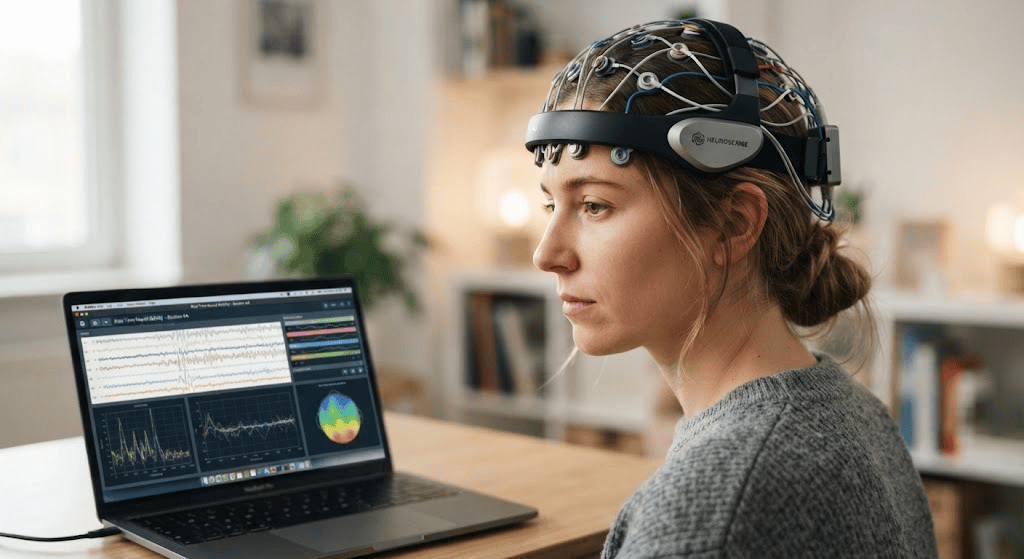
Imagine moving a cursor, typing a message, or controlling a wheelchair — without touching anything. That’s not science fiction anymore. It’s the everyday reality of a brain computer interface EEG system, a technology that reads electrical signals from your brain and translates them into commands a computer can understand.
Brain-computer interfaces (BCIs) built on electroencephalography (EEG) are already used in hospitals, research labs, gaming setups, and even meditation apps. Unlike surgically implanted BCIs, EEG-based systems sit on the scalp and require no surgery, which is why they’re the most widely used and studied form of brain-computer interface today.
This guide breaks down exactly how EEG-based BCIs work, the different types available, real-world applications, the best consumer devices on the market, and where this technology is headed next.
What Is a Brain Computer Interface (EEG)?
A brain-computer interface is a system that creates a direct communication pathway between the brain and an external device, bypassing muscles and nerves entirely. When that system uses EEG to capture brain activity, it’s called an EEG-based BCI.
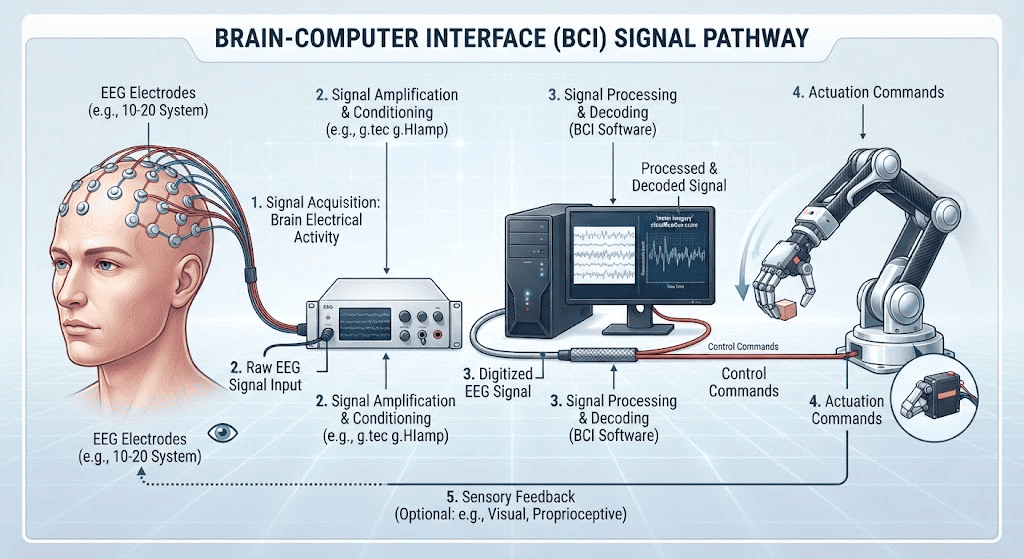
EEG measures the tiny electrical voltages produced when groups of neurons fire together. These signals are picked up by electrodes placed on the scalp, amplified, filtered, and then processed by software that identifies patterns linked to specific thoughts, intentions, or mental states.
In simple terms, an EEG-based BCI works like this:
- Your brain generates electrical activity.
- Electrodes on your scalp detect that activity.
- Software decodes the signal into a meaningful command.
- A connected device (computer, wheelchair, prosthetic, or app) executes that command.
This entire loop can happen in a fraction of a second, which is what makes real-time control possible.
How EEG Captures Brain Signals
EEG has been used in clinical neurology for nearly a century, mainly for diagnosing epilepsy and sleep disorders. BCI research adapted this same technology to detect intentional brain patterns rather than just diagnostic abnormalities.
The Role of Electrodes
Electrodes are placed on the scalp according to standardized layouts, most commonly the 10-20 system, which ensures consistent placement across different people and studies. Each electrode picks up voltage fluctuations from the brain region beneath it.
There are two main electrode types used in EEG-based BCIs:
- Wet electrodes — use conductive gel for a stronger, cleaner signal; common in clinical and research settings
- Dry electrodes — no gel needed, faster setup, used in most consumer headsets, though signal quality can be slightly noisier
Key Brain Signal Patterns Used in BCIs
EEG-based BCIs typically rely on a few well-studied brain signal types, each suited to different applications. According to a widely cited review of EEG-based brain-computer interfaces published on the National Institutes of Health’s research repository, these systems are real-time computer-based systems that translate brain signals into useful commands, and most current applications depend on refining exactly which signal pattern is used for control.
| Signal Type | What It Detects | Common Use Case |
|---|---|---|
| P300 | A spike 300ms after a person notices a meaningful stimulus | Spelling devices, attention-based selection |
| SSVEP (Steady-State Visually Evoked Potential) | Brain response to flickering visual stimuli | Fast cursor or menu control |
| Motor Imagery | Brain activity when imagining movement (without moving) | Prosthetics, wheelchair control, rehabilitation |
| Slow Cortical Potentials | Gradual voltage shifts a user learns to control | Communication for locked-in patients |
Types of EEG-Based Brain Computer Interfaces
Not all BCIs are built the same way. EEG sits at the non-invasive end of a broader spectrum of brain-computer interface technology.
| Type | How It Works | Signal Quality | Risk Level |
|---|---|---|---|
| Non-invasive (EEG) | Electrodes worn on the scalp | Moderate, some noise | None — no surgery required |
| Semi-invasive (ECoG) | Electrode grid placed under the skull, above the brain | High | Requires surgery |
| Invasive (Microelectrode arrays) | Electrodes implanted directly into brain tissue | Very high, precise | Requires surgery, higher risk |
EEG-based BCIs trade some precision for safety and accessibility. Since they don’t require surgery, they can be used repeatedly, tested on healthy volunteers, and sold as consumer products — something invasive systems like Neuralink’s implant cannot do at this stage.
How an EEG-Based BCI System Works, Step by Step
Understanding the full pipeline helps explain why some BCIs feel instant while others require training sessions before they work reliably.
- Signal Acquisition — Electrodes capture raw electrical activity from the scalp, measured in microvolts.
- Amplification and Filtering — Raw EEG signals are extremely weak and mixed with noise from muscle movement, eye blinks, and electrical interference. Amplifiers boost the signal, and filters remove unwanted frequencies.
- Feature Extraction — Software isolates the specific patterns relevant to the task, such as alpha waves (relaxation), beta waves (focus), or event-related potentials like the P300.
- Classification — A machine learning model matches the extracted features to a known command, such as “move left” or “select this letter.”
- Command Execution — The matched command is sent to the connected device, whether it’s a cursor, a robotic arm, or a game character.
- Feedback Loop — The user often sees or feels the result of their command, which helps the brain adjust and improve accuracy over repeated use — a process known as neurofeedback learning.
Real-World Applications of EEG-Based Brain Computer Interfaces
EEG-BCI technology is no longer confined to research labs. It’s already solving real problems across multiple industries.
Healthcare and Assistive Technology
This is the most impactful application area. EEG-BCIs help:
- Patients with ALS or severe paralysis communicate through spelling systems
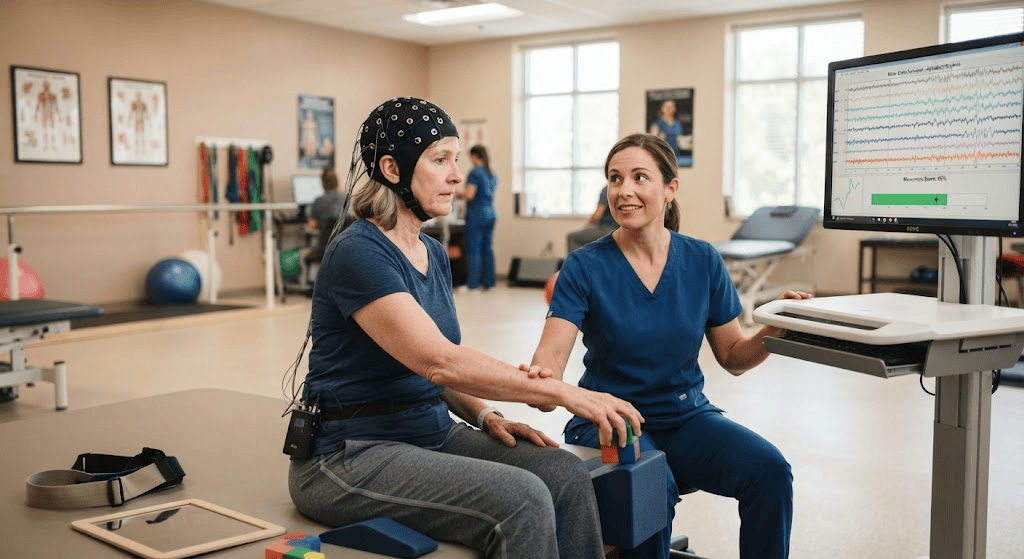
- Stroke survivors regain motor function through BCI-assisted rehabilitation
- Individuals with locked-in syndrome interact with caregivers and devices
- Clinicians monitor cognitive load, fatigue, and attention during recovery
Gaming and Entertainment
Consumer-grade EEG headsets allow users to control simple games using focus or relaxation levels, and some VR experiences now incorporate EEG-based emotion detection to adjust difficulty or atmosphere in real time.
Neurofeedback and Mental Wellness
Apps paired with EEG headbands track meditation depth, focus, and stress levels, giving users real-time feedback to train their mental state — similar to a fitness tracker, but for brain activity.
Research and Cognitive Science
Universities and labs use EEG-BCIs to study attention, decision-making, learning, and neurological conditions, since EEG offers a non-invasive way to observe brain function in real time.
Security and Authentication
Emerging research explores EEG as a biometric identifier, since individual brainwave patterns are difficult to replicate — though this application is still experimental.
Popular Consumer EEG Devices in 2026
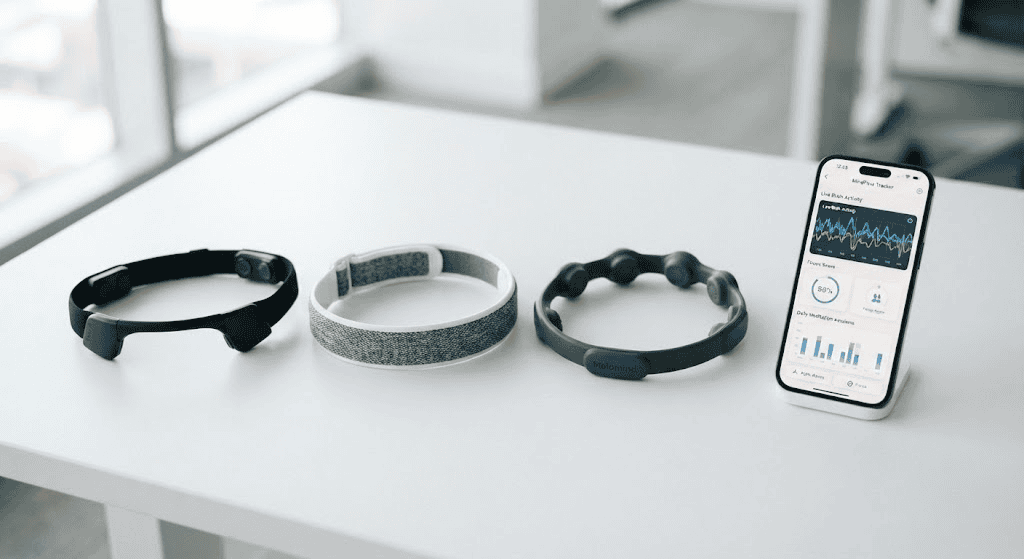
If you want to try EEG-based BCI technology yourself, several consumer-friendly devices are available. These are not medical-grade tools, but they’re excellent for learning, neurofeedback, and hobbyist projects.
| Device | Best For | Electrode Type | Approx. Use Case |
|---|---|---|---|
| Muse S / Muse 2 | Meditation and sleep tracking | Dry | Beginners, wellness apps |
| Emotiv Insight / EPOC X | Research-grade signal quality | Dry/Semi-dry | Developers, cognitive research |
| OpenBCI | Custom BCI development | Dry/Wet (configurable) | Engineers, students, makers |
| NeuroSky MindWave | Basic focus/attention tracking | Dry | Education, simple games |
Practical tip: If you’re just starting, prioritize a device with an open API and active developer community (like OpenBCI or Emotiv) rather than the cheapest option — this gives you room to experiment beyond the built-in app.
EEG-Based BCI vs. Invasive BCI: Key Differences
People often confuse EEG headsets with implanted systems like Neuralink, but they serve very different purposes and users.
| Factor | EEG-Based BCI | Invasive BCI (e.g., implants) |
|---|---|---|
| Surgery required | No | Yes |
| Signal resolution | Moderate | High |
| Accessibility | Widely available, affordable | Limited to clinical trials |
| Regulatory status | Consumer devices unregulated as medical tools | Requires FDA clearance and clinical oversight |
| Typical users | General public, researchers, patients (non-invasive therapy) | Patients with severe paralysis in clinical trials |
| Long-term risk | Minimal | Surgical and biological risks |
Ongoing NIH-supported clinical research continues to compare these approaches directly. One long-running NIH study, for example, has examined how brain waves are recorded by an electroencephalogram (EEG) through electrodes attached to the scalp to help control a prosthetic arm in patients with stroke or traumatic brain injury — illustrating how EEG-based methods remain central even as invasive alternatives advance.
Advantages and Limitations of EEG-Based BCIs
No technology is perfect. Here’s an honest look at where EEG-based BCIs excel and where they still fall short.
Advantages
- No surgery or medical risk involved
- Portable and increasingly affordable
- Can be used repeatedly without health concerns
- Widely validated by decades of clinical EEG research
- Suitable for both healthy users and patients
Limitations
- Lower spatial resolution compared to invasive methods
- Signals can be disrupted by muscle movement, hair, or environmental noise
- Requires training time for accurate classification
- Not yet capable of extremely fine motor control (like individual finger movement)
- Long-term consumer accuracy still varies by device quality
Challenges and Ethical Considerations
As EEG-BCI technology spreads beyond hospitals into consumer products, a few important issues deserve attention:
- Data privacy — Brainwave data is highly personal. Users should check whether a device stores or shares raw EEG data before agreeing to app permissions.
- Accuracy claims — Some consumer marketing overstates what low-cost EEG headsets can actually detect. A single dry electrode cannot reliably read complex thoughts.
- Accessibility and cost — While prices have dropped significantly, medical-grade EEG-BCI rehabilitation programs are still not universally accessible.
- Regulation gaps — Consumer wellness devices generally aren’t regulated as medical devices, so claims about stress or focus tracking should be treated as general wellness indicators, not diagnostic tools.
The Future of EEG-Based Brain Computer Interface Technology
Several trends are shaping where this field is headed over the next several years:
- Dry electrode improvements — New sensor materials are closing the gap between dry and wet electrode signal quality, making setup faster without sacrificing accuracy.
- AI-enhanced signal decoding — Machine learning models are getting significantly better at filtering noise and recognizing subtle intent from EEG data, reducing training time for new users.
- Hybrid BCI systems — Combining EEG with other sensors (like eye-tracking or NIRS) is improving reliability for both medical and consumer applications.
- Wearable integration — Expect EEG sensors to increasingly appear in everyday wearables like headphones and smart glasses, rather than standalone headsets.
- Expanded clinical use — As evidence builds around rehabilitation outcomes, more hospitals are expected to adopt EEG-BCI-assisted therapy as a standard offering, not just an experimental one.
EEG-based BCIs are unlikely to fully replace invasive systems for applications requiring extremely fine control, but their safety, affordability, and flexibility ensure they’ll remain the most widely used form of brain-computer interface for the foreseeable future.
Frequently Asked Questions
Is a brain-computer interface EEG device safe to use at home?
Yes. Non-invasive EEG headsets involve no surgery and pose no significant health risk. They simply detect electrical activity already present on your scalp.
Can EEG-based BCIs read my exact thoughts?
No. Current EEG-BCI technology detects general patterns like focus, relaxation, or intent to move — not specific words or detailed thoughts. Reading precise thoughts remains far beyond current capability.
How accurate are consumer EEG headsets compared to medical ones?
Consumer devices are generally less accurate due to fewer electrodes and dry sensor technology, but they’re sufficient for wellness tracking, basic gaming, and educational purposes.
Do I need training to use a brain-computer interface EEG system?
Most systems require some practice, since your brain needs to learn to produce consistent, recognizable signal patterns. Accuracy typically improves over several sessions.
What’s the difference between EEG and an implanted BCI like Neuralink?
EEG is non-invasive and worn externally, while implants like Neuralink require surgery and are currently limited to clinical trials. EEG-based BCIs are more accessible but offer lower signal precision.
Conclusion
A brain computer interface EEG system turns the brain’s natural electrical activity into a tool for communication, control, and even mental wellness tracking — all without surgery. From helping paralyzed patients regain independence to letting hobbyists build custom neurotech projects at home, EEG-based BCIs sit at a rare intersection of accessibility and genuine scientific depth.
Whether you’re exploring this technology for medical rehabilitation, personal wellness, or pure curiosity, understanding how EEG captures and decodes brain signals is the first step toward using it effectively — and toward appreciating just how far this field has come in a relatively short time.