
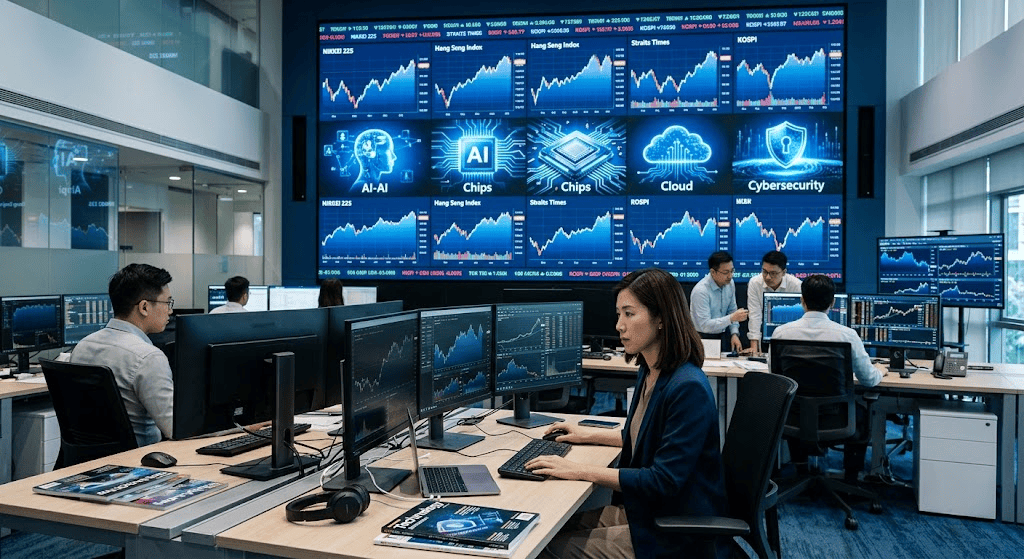
Explore ftasiastock technology news, 7 powerful technology trends, AI, fintech, semiconductors, cloud computing, cybersecurity, and practical market insights.
Introduction
Searching for ftasiastock technology news usually means looking for information at the intersection of technology, financial markets, companies, and investment trends. It is a search phrase that can lead readers toward technology developments, fintech updates, stock-market analysis, artificial intelligence news, digital transformation, and other developments that may influence businesses and investors.
The important point is that technology news should not be treated as a collection of headlines. A new AI model, semiconductor investment, cloud-computing expansion, cybersecurity product, or digital-payment innovation may sound exciting, but the real question is what it means for businesses, customers, revenue, costs, competition, and eventually market valuations.
That is why reading ftasiastock technology news effectively requires more than knowing what happened. Readers also need to understand why it happened, who benefits, what could go wrong, and which information should be independently verified.
This guide explains how to approach technology market news, what themes deserve attention, how technology developments can affect stocks, and how to separate useful information from exaggerated claims.
What Does FTAsiaStock Technology News Mean?
The phrase ftasiastock technology news is best understood as a search query related to technology developments and their relationship with financial markets.
Unlike a single technology category, the topic can cover several connected areas:
- Artificial intelligence and machine learning
- Semiconductor and chip manufacturing
- Cloud computing
- Cybersecurity
- Fintech and digital banking
- Blockchain and digital assets
- Automation and robotics
- Telecommunications
- E-commerce technology
- Data analytics
- Enterprise software
- Digital payments
- Technology-sector investment trends
The financial angle is what makes this type of news particularly useful. A technology announcement can affect a company’s growth expectations, operating expenses, competitive position, or long-term strategy.
For example, a company investing heavily in artificial intelligence may initially face higher infrastructure costs. However, if those investments eventually improve productivity or create new products, investors may view the spending differently.
The same principle applies to semiconductor companies. Increased demand for computing infrastructure can create opportunities for chip designers, manufacturers, equipment suppliers, data-center operators, and related businesses.
The headline is only the starting point. The business impact is the part worth investigating.
Why Technology News Matters to Stock-Market Readers
Technology has become part of almost every major industry. Banks use software and AI, manufacturers use automation, retailers rely on cloud infrastructure, and healthcare companies increasingly depend on digital systems.
This means technology news can affect companies that are not traditionally classified as technology businesses.
Consider a simple example:
| Technology development | Potential business impact | What investors may examine |
|---|---|---|
| New AI system | Automation and productivity | Development cost and adoption |
| Semiconductor expansion | Greater chip capacity | Demand and margins |
| Cloud migration | Scalable infrastructure | Recurring revenue |
| Cybersecurity upgrade | Better protection | Cost and customer retention |
| Digital payments | Faster transactions | Transaction volume and fees |
| Robotics adoption | Lower manual workload | Capital expenditure and productivity |
| 5G expansion | Faster connectivity | Infrastructure spending and demand |
None of these developments automatically makes a company a good investment.
The technology may be impressive while the company’s valuation is already too high. Conversely, an ordinary-looking technology improvement may produce significant savings over several years.
This is why good market analysis connects technology → business economics → financial performance → valuation.
The Five Technology Themes Worth Watching
1. Artificial Intelligence
Artificial intelligence remains one of the most important technology themes because its effects extend far beyond software companies.
AI can influence:
- Customer service
- Financial analysis
- Fraud detection
- Software development
- Marketing
- Medical research
- Manufacturing
- Logistics
- Search
- Data analysis
For investors, the interesting question is moving from “Does this company use AI?” to “How does AI change the company’s economics?”
A company that uses AI to reduce costs may benefit differently from one selling AI infrastructure. Another company may use AI primarily as a marketing feature without generating meaningful financial benefits.
When reading AI-related news, look for measurable information such as customer adoption, revenue contribution, infrastructure spending, productivity improvements, and changes in operating margins.
2. Semiconductors
Modern technology depends heavily on semiconductors.
Chips are essential for smartphones, computers, vehicles, industrial equipment, cloud servers, AI systems, and many connected devices.
This creates a broad technology ecosystem involving:
- Chip designers
- Semiconductor manufacturers
- Equipment suppliers
- Packaging companies
- Materials suppliers
- Data-center operators
- Electronics manufacturers
A major technology announcement can therefore affect several businesses at once.
However, investors should also consider cyclical risks. Semiconductor demand can rise rapidly and then weaken when customers reduce inventories or economic conditions change.
3. Cloud Computing
Cloud services have transformed how companies purchase and operate technology infrastructure.
Instead of building every system internally, businesses can rent computing power, storage, databases, analytics tools, and software services.
For investors, important indicators include:
- Recurring revenue
- Customer growth
- Usage levels
- Infrastructure expenditure
- Operating margins
- Retention rates
- Enterprise adoption
Cloud growth can be attractive, but infrastructure is expensive. A business experiencing strong revenue growth may still struggle to generate free cash flow if expansion costs remain extremely high.
4. Cybersecurity
As more business activity moves online, cybersecurity becomes a fundamental business requirement.
Companies need protection against:
- Data theft
- Ransomware
- Account compromise
- Payment fraud
- Supply-chain attacks
- Identity theft
- Network intrusions
Cybersecurity is different from some consumer technology trends because demand can remain strong even when businesses reduce discretionary spending.
When reading cybersecurity news, look beyond claims about being “AI-powered” or “next generation.” Ask what problem the product solves, who pays for it, how difficult it is to replace, and whether the company has evidence of customer adoption.
5. Fintech and Digital Finance
Financial technology sits directly between technology and markets.
The sector includes:
- Digital wallets
- Online banking
- Payment processors
- Lending platforms
- Automated financial tools
- Fraud-prevention systems
- Blockchain applications
- Investment platforms
The strongest fintech stories often involve improvements in speed, convenience, security, or cost.
But fintech also faces regulatory, credit, cybersecurity, and competitive risks. A fast-growing user base does not automatically mean a profitable business.
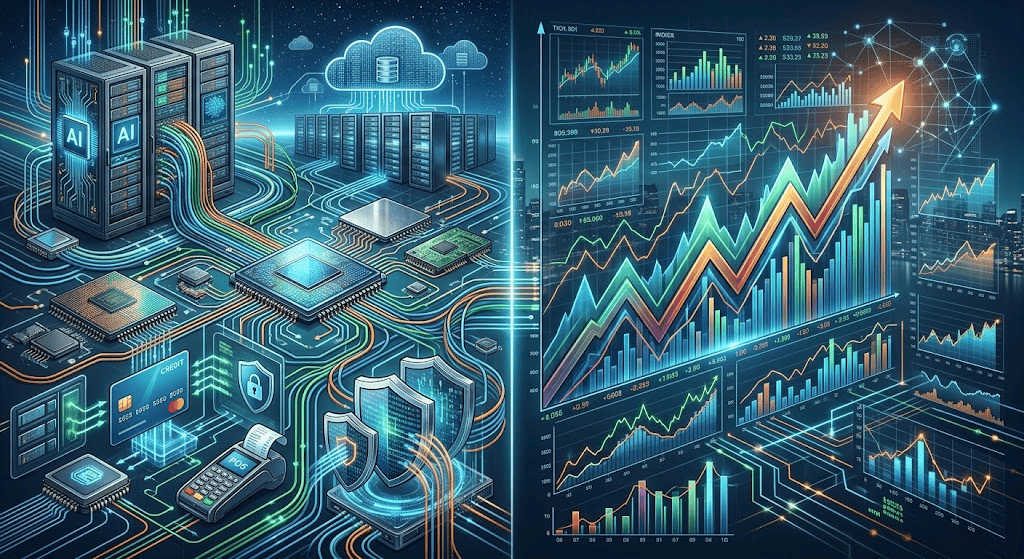
How FTAsiaStock Technology News Can Influence Stock Prices
One of the biggest mistakes new investors make is assuming that good technology news automatically means a rising stock price.
Markets are more complicated.
Stock prices generally reflect expectations about the future. If investors already expect exceptional growth, even a positive announcement may fail to push a stock higher.
Imagine a company expected to grow earnings by 30%. If it reports 20% growth, the business may still be performing well, but investors could become disappointed because expectations were higher.
This creates an important distinction:
Good company news is not always good stock news.
When evaluating a technology headline, consider four questions:
- Was the development already expected?
- Does it change revenue or costs?
- How large could the financial impact become?
- Is the current valuation already pricing in strong growth?
These questions turn a headline into an analytical framework.
How to Analyze FTAsiaStock Technology News Effectively
Instead of reading every headline from beginning to end, use a structured process.
Step 1: Identify the actual event
Start by writing down exactly what happened.
Was it:
- A product launch?
- A partnership?
- A regulatory decision?
- An acquisition?
- A new investment?
- An earnings announcement?
- A research breakthrough?
- A supply-chain development?
Avoid interpreting the news before identifying the event itself.
Step 2: Identify the companies involved
A technology story may involve more businesses than the headline suggests.
For example, a data-center expansion can affect the company building the facility, the chip suppliers, electricity providers, networking companies, cooling-system manufacturers, and cloud-service operators.
Create a simple list of the direct and indirect participants.
Step 3: Determine the financial connection
Ask whether the news affects:
- Revenue
- Costs
- Margins
- Capital expenditure
- Customer acquisition
- Market share
- Cash flow
- Competitive advantage
If there is no clear financial connection, the announcement may be strategically interesting without being immediately relevant to investors.
Step 4: Check the source
Technology news spreads quickly, particularly through social media, newsletters, blogs, and online communities.
That makes source verification essential.
The SEC’s Investor.gov guidance warns that online investment information can be inaccurate or misleading and recommends independently researching investment opportunities before acting on them. Investor.gov guidance on internet and social-media investment fraud
Look for:
- Company filings
- Official announcements
- Regulatory documents
- Earnings reports
- Reputable financial publications
- Named experts with relevant credentials
A headline without evidence should be treated as a lead for further research, not as proof.
What Makes Technology News Credible?
A credible technology article should tell readers more than what is supposedly happening.
Look for evidence.
Strong signals
A stronger report usually contains:
- A clearly identified company
- A specific announcement
- A date
- Named executives or organizations
- Supporting documents
- Financial figures where relevant
- Independent confirmation
- Clear distinction between fact and opinion
Warning signs
Be more cautious when an article contains:
- Guaranteed investment claims
- Extremely precise price predictions
- “Secret” information
- Anonymous sources with no supporting evidence
- Pressure to act immediately
- Claims of zero-risk returns
- Excessive promotional language
- No identifiable source for major claims
The SEC has specifically warned investors about social-media stock-tip scams and recommends not making investment decisions solely on information found through social platforms.
This principle applies beyond social media. Any financial technology article should be independently checked before it influences a real investment decision.
Technology News vs. Technology Investment Analysis
These two ideas are related but not identical.
Technology news answers:
What happened?
Investment analysis asks:
What could this mean financially?
For example:
News: A company announces a major AI infrastructure investment.
Analysis: The investment could increase computing capacity and support future AI services, but investors should examine how much the project costs, when it may produce revenue, and whether demand will justify the spending.
This distinction is especially important for beginners.
News can tell you where to look. Analysis helps you understand what you find.

How Beginners Can Build a Technology News Routine
You do not need to monitor markets all day.
A simple routine can be more effective.
Daily: scan major developments
Spend a few minutes identifying:
- Major company announcements
- Significant regulatory developments
- Important technology launches
- Major market-moving events
Do not immediately trade based on what you see.
Weekly: study the bigger picture
Look at:
- Industry trends
- Earnings developments
- Competitor activity
- Technology adoption
- Major capital investments
- Regulatory changes
Weekly review helps prevent individual headlines from dominating your judgment.
Monthly: reassess your assumptions
Ask:
- Has the technology actually gained adoption?
- Are businesses spending more or less?
- Are profit margins improving?
- Has competition increased?
- Have valuations changed?
- Is the original growth thesis still reasonable?
This approach is much more useful than chasing every breaking-news headline.
A Simple Technology Stock Research Checklist
Before making an investment decision based on technology news, run through this checklist:
- Company: What business is involved?
- Technology: What exactly changed?
- Customers: Who will use the technology?
- Revenue: Could it create meaningful sales?
- Costs: What investment is required?
- Competition: Can competitors easily copy it?
- Regulation: Are there legal or compliance risks?
- Timing: When could financial benefits appear?
- Valuation: What expectations are already reflected in the stock price?
- Evidence: Can the major claims be independently verified?
This prevents a common mistake: confusing technological excitement with investment value.
How AI Is Changing Technology Market Research
AI is changing both the technology industry and the way investors research it.
Modern research tools can help process large amounts of information, compare documents, identify patterns, summarize earnings calls, and organize financial data.
But AI-generated analysis has limitations.
A system can summarize a company’s announcement accurately while still missing an important detail about debt, regulation, competition, or valuation.
For that reason, AI should be treated as a research assistant rather than an unquestionable authority.
A useful workflow is:
Discover → Verify → Compare → Analyze → Decide
Use technology to discover information quickly. Then verify the original source, compare it with independent information, analyze the financial implications, and only then decide what the information means for you.
This approach is consistent with Google’s guidance that useful search content should provide original value, reliable information, clear sourcing, and a genuinely people-first purpose rather than simply rewriting existing material.
The Difference Between a Trend and a Durable Opportunity
Not every technology trend becomes a long-term business opportunity.
A trend may attract attention because:
- Investors are excited
- The media is covering it heavily
- Companies are announcing new products
- Consumer interest is increasing
A durable opportunity usually has stronger foundations.
Look for:
Real customer demand
Are customers actually paying for the product or service?
Sustainable economics
Can the business make money after accounting for infrastructure, employees, marketing, and other expenses?
Competitive protection
Does the company possess something difficult for competitors to reproduce?
Long-term usefulness
Does the technology solve a persistent problem, or is it primarily a temporary novelty?
Scalable operations
Can the company grow without costs increasing at the same rate as revenue?
These questions are particularly important when reading AI, blockchain, robotics, and other emerging-technology stories.
Common Mistakes When Following Technology Market News
Mistake 1: Chasing the headline
A dramatic headline can create emotional reactions. Waiting for additional evidence often produces better decisions.
Mistake 2: Confusing popularity with profitability
A technology can be extremely popular without producing sustainable profits for every company associated with it.
Mistake 3: Ignoring valuation
A great business can still be an expensive investment.
Mistake 4: Treating forecasts as facts
Analyst estimates, company projections, and technology predictions are not guarantees.
Mistake 5: Relying on one source
Important claims should be checked against primary documents or independent reporting.
Mistake 6: Ignoring downside risk
Every technology investment thesis should include a reason why it could fail.
What to Watch Next in Technology Markets
The technology sector is likely to remain closely connected to financial markets as businesses continue investing in digital infrastructure.
Several themes deserve continued attention:
- AI infrastructure and enterprise adoption
- Semiconductor capacity and supply chains
- Cloud computing economics
- Cybersecurity spending
- Digital payment systems
- Robotics and industrial automation
- Data-center infrastructure
- Telecommunications investment
- Financial technology regulation
- Energy requirements for large-scale computing
The most valuable developments will not necessarily be the loudest ones.
A quiet improvement in efficiency, a new enterprise contract, a successful cybersecurity product, or a profitable software service can matter more financially than a highly publicized technology demonstration.
Frequently Asked Questions
What is ftasiastock technology news?
Ftasiastock technology news is a search phrase associated with technology-focused financial information, including developments involving AI, semiconductors, fintech, digital transformation, cybersecurity, cloud computing, and technology-related market trends.
Is technology news useful for investors?
Yes, when it is used as part of broader research. Technology news can help identify important developments, but investment decisions should also consider financial statements, valuation, competition, risk, and independent sources.
Does positive technology news always increase a stock price?
No. Stock prices reflect expectations as well as current results. If strong growth is already expected, a positive announcement may have little effect. If results disappoint expectations, even a successful business can experience a falling share price.
What technology sectors deserve the most attention?
AI, semiconductors, cloud computing, cybersecurity, fintech, robotics, telecommunications, and digital infrastructure are among the areas worth monitoring. The right focus depends on your research objectives and risk tolerance.
How can I verify a technology investment claim?
Start with the original company announcement or regulatory filing. Then compare the claim with independent financial reporting and check whether the numbers, people, organizations, and technology being discussed can be independently confirmed.
Can AI be trusted for stock research?
AI can help organize and analyze information, but it should not replace source verification or independent judgment. Financial decisions require particular care because inaccurate information can have real financial consequences.
Final Takeaway
FTAsiaStock technology news can be useful when approached as a starting point for research rather than a shortcut to investment decisions.
The most valuable technology stories explain more than what is new. They help readers understand how innovation affects businesses, markets, customers, costs, competition, and long-term financial performance.
Whether the topic is artificial intelligence, semiconductors, cloud computing, cybersecurity, fintech, or digital infrastructure, the same principle applies: separate the technology story from the investment story.
Start with the facts. Verify important claims. Look at the business economics. Consider competition and regulation. Then evaluate whether the market’s expectations make sense.
That process produces much more useful insight than simply following the latest headline.
For publishers covering this subject, the same standard matters. Technology and finance are areas where readers benefit from clear sourcing, transparent authorship, accurate explanations, and genuinely useful analysis. A strong article should answer the reader’s question while also giving them a practical method for evaluating the next technology story they encounter.